





/NASA’s%20Artemis%20III%20Announcement%20(Official%20NASA%20Trailer)~thumb.jpg)

Where does the solar system end? It all depends on the criteria you are using. Based on where the planets end, you could say it's Neptune and the Kuiper Belt. If you measure by edge of the sun's magnetic fields, the end is the heliosphere. If you judge by the…
Ver en NASA ↗🚀 Biblioteca espacial oficial
Imágenes y vídeos de NASA
Explora el catálogo multimedia público de NASA sin salir de TuPortalNews.
Explora temas destacados
Selecciona un tema o realiza una búsqueda personalizada.
8.189 resultados en NASA
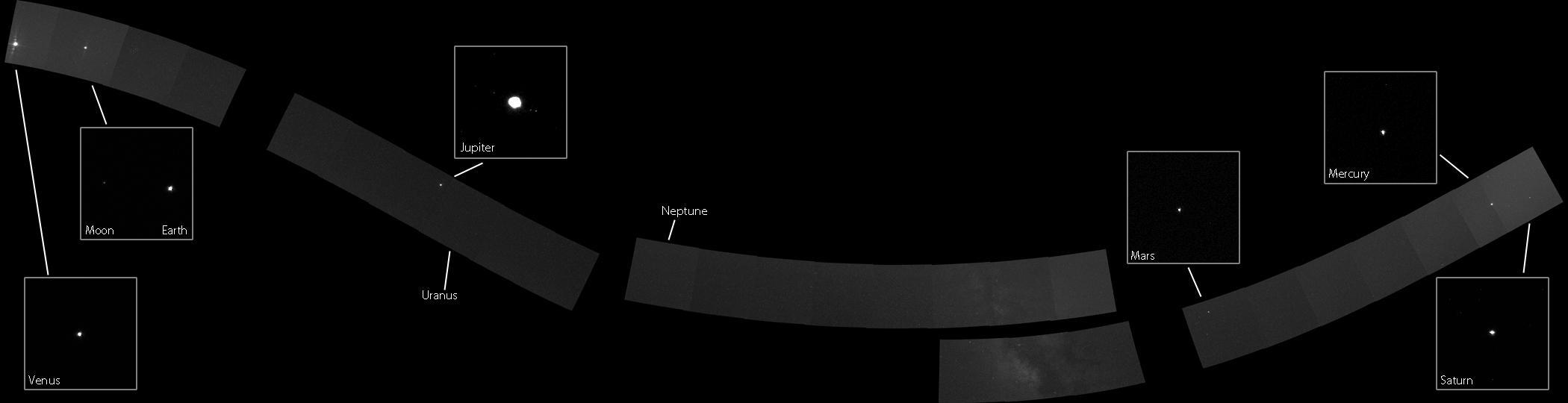
A Solar System Family Portrait, from the Inside Out.
Ver en NASA ↗Solar System in Miniature
Ver en NASA ↗Stefanie Milam talks about Webb's focus on our solar system.
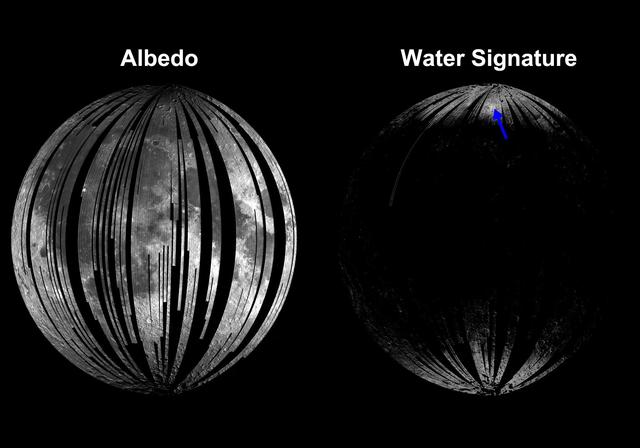
Ver en NASA ↗K/Th in the Inner Solar System
Ver en NASA ↗This solar system montage of the nine planets and four large moons of Jupiter in our solar system are set against a false-color view of the Rosette Nebula.
Ver en NASA ↗This artist's concept puts solar system distances in perspective. The scale bar is in astronomical units, with each set distance beyond 1 AU representing 10 times the previous distance. One AU is the distance from the sun to the Earth, which is about 93 milli…
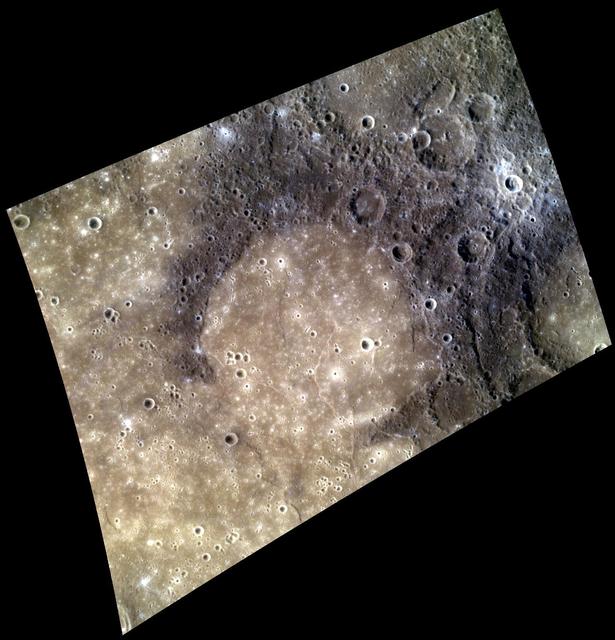
Ver en NASA ↗A Color View of the Solar System Innermost Planet
Ver en NASA ↗Scientists are unlocking clues about the earliest formation of our solar system from a Kuiper Belt Object known as 2014 MU69.
Ver en NASA ↗NASA’s Advanced Composite Solar Sail System is seen orbiting Earth in this 13-second exposure photograph, Monday, Sept. 2, 2024, from Arlington, Virginia. The mission team confirmed the spacecraft’s unique composite boom system unfurled its reflective sail on…
Ver en NASA ↗NASA Science Live: Storms Across the Solar System [Episode 4]
Ver en NASA ↗This diagram compares the planets of the inner solar system to Kepler-69, a two-planet system about 2,700 light-years from Earth in the constellation Cygnus.
Ver en NASA ↗Artist concept compares a hypothetical solar system centered around a tiny un to a known solar system centered around a star 55 Cancri.
Ver en NASA ↗This graphic, based on data from NASA Voyager spacecraft, shows a model of what our solar system looks like to an observer outside in interstellar space, watching our solar system fly towards the observer.
Ver en NASA ↗This is an artist conception of a solar-system montage of the eight planets, a comet and an asteroid.
Ver en NASA ↗This diagram compares the planets of our inner solar system to Kepler-186, a five-planet star system about 500 light-years from Earth in the constellation Cygnus.
Ver en NASA ↗This diagram compares the planets of the inner solar system to Kepler-62, a five-planet system about 1,200 light-years from Earth in the constellation Lyra. At seven billion years old, the star is somewhat older than the sun.
Ver en NASA ↗This artist diagram based on observations from NASA Spitzer Space Telescope compares the Epsilon Eridani system to our own solar system. The two systems are structure
Ver en NASA ↗With the discovery of an eighth planet, NASA's Kepler-90 system is the first to tie with our solar system in number of planets. This is an artist's concept compared with our own solar system.
Ver en NASA ↗Researchers are brewing up icy, organic concoctions in the lab to mimic materials at the edge of our solar system and beyond. The lab is shown at right, and a very young solar system, with its swirling planet-forming disk is at left.
Ver en NASA ↗This simulated view approximates Voyager 1's perspective when it took its final series of images known as the Family Portrait of the Solar System.
Ver en NASA ↗Web short covering the IBEX science result
Ver en NASA ↗Amirani-Maui: Longest Known Active Lava Flow in the Solar System
Ver en NASA ↗Contenido y metadatos proporcionados por la NASA Image and Video Library.