





/NASA’s%20Artemis%20III%20Announcement%20(Official%20NASA%20Trailer)~thumb.jpg)

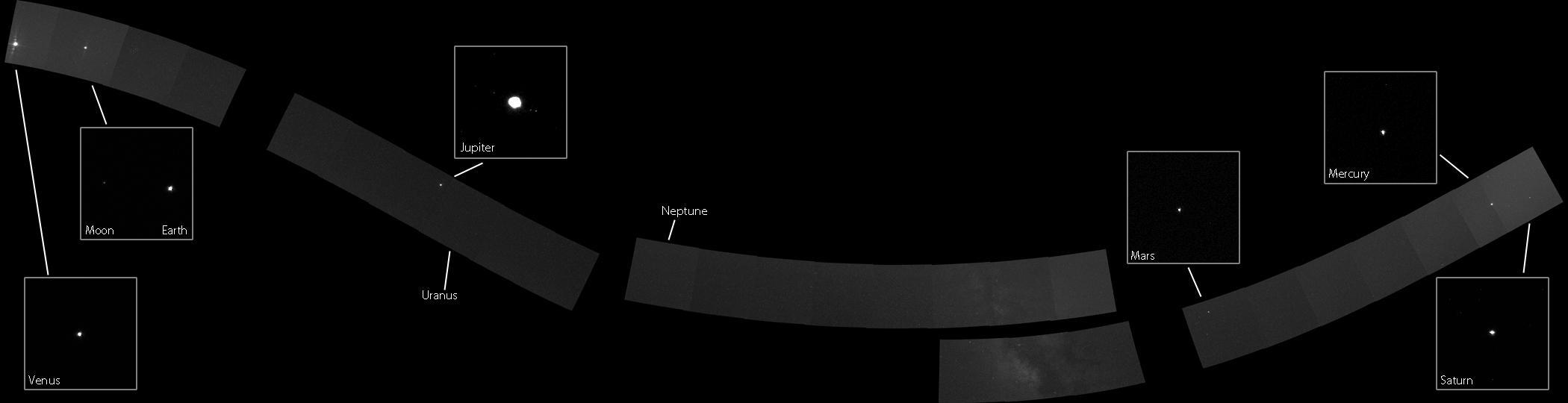
A Solar System Family Portrait, from the Inside Out.
Ver en NASA ↗🚀 Biblioteca espacial oficial
Imágenes y vídeos de NASA
Explora el catálogo multimedia público de NASA sin salir de TuPortalNews.
Explora temas destacados
Selecciona un tema o realiza una búsqueda personalizada.
7.273 resultados en NASA
Solar System in Miniature
Ver en NASA ↗K/Th in the Inner Solar System
Ver en NASA ↗This solar system montage of the nine planets and four large moons of Jupiter in our solar system are set against a false-color view of the Rosette Nebula.
Ver en NASA ↗This artist's concept puts solar system distances in perspective. The scale bar is in astronomical units, with each set distance beyond 1 AU representing 10 times the previous distance. One AU is the distance from the sun to the Earth, which is about 93 milli…
Ver en NASA ↗A Color View of the Solar System Innermost Planet
Ver en NASA ↗NASA’s Advanced Composite Solar Sail System is seen orbiting Earth in this 13-second exposure photograph, Monday, Sept. 2, 2024, from Arlington, Virginia. The mission team confirmed the spacecraft’s unique composite boom system unfurled its reflective sail on…
Ver en NASA ↗This diagram compares the planets of the inner solar system to Kepler-69, a two-planet system about 2,700 light-years from Earth in the constellation Cygnus.
Ver en NASA ↗Artist concept compares a hypothetical solar system centered around a tiny un to a known solar system centered around a star 55 Cancri.
Ver en NASA ↗This graphic, based on data from NASA Voyager spacecraft, shows a model of what our solar system looks like to an observer outside in interstellar space, watching our solar system fly towards the observer.
Ver en NASA ↗This is an artist conception of a solar-system montage of the eight planets, a comet and an asteroid.
Ver en NASA ↗This diagram compares the planets of our inner solar system to Kepler-186, a five-planet star system about 500 light-years from Earth in the constellation Cygnus.
Ver en NASA ↗This diagram compares the planets of the inner solar system to Kepler-62, a five-planet system about 1,200 light-years from Earth in the constellation Lyra. At seven billion years old, the star is somewhat older than the sun.
Ver en NASA ↗This artist diagram based on observations from NASA Spitzer Space Telescope compares the Epsilon Eridani system to our own solar system. The two systems are structure
Ver en NASA ↗With the discovery of an eighth planet, NASA's Kepler-90 system is the first to tie with our solar system in number of planets. This is an artist's concept compared with our own solar system.
Ver en NASA ↗Researchers are brewing up icy, organic concoctions in the lab to mimic materials at the edge of our solar system and beyond. The lab is shown at right, and a very young solar system, with its swirling planet-forming disk is at left.
Ver en NASA ↗This simulated view approximates Voyager 1's perspective when it took its final series of images known as the Family Portrait of the Solar System.
Ver en NASA ↗Amirani-Maui: Longest Known Active Lava Flow in the Solar System
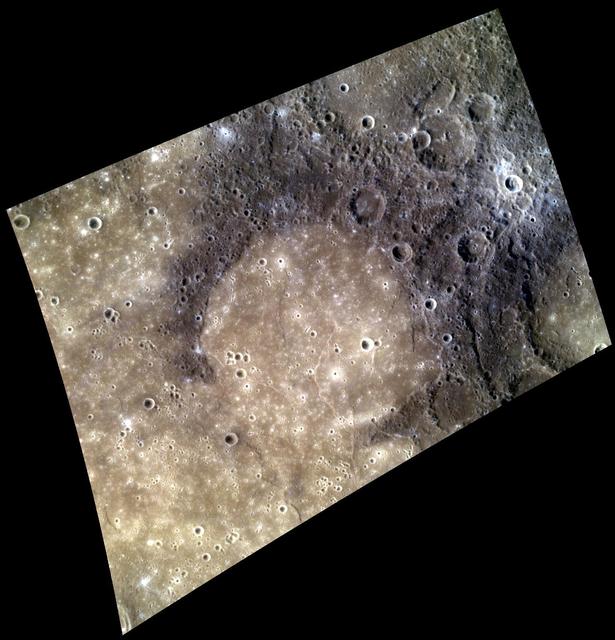
Ver en NASA ↗Mercury Caloris Basin, One of the Largest Impact Basins in the Solar System
Ver en NASA ↗This artist concept shows NASA Voyager 1 spacecraft in a new region at the edge of our solar system where there are fewer low energy particles that originate from inside our solar system.
Ver en NASA ↗This artist concept shows NASA Voyager 1 spacecraft in a new region at the edge of our solar system where the amount of high-energy particles diffusing into our solar system from outside has increased.
Ver en NASA ↗This artist concept depicts a distant hypothetical solar system, similar in age to our own. Looking inward from the system outer fringes, a ring of dusty debris can be seen, and within it, planets circling a star the size of our Sun.
Ver en NASA ↗This artist concept illustrates two planetary systems -- 55 Cancri top and our own. Blue lines show the orbits of planets, including the dwarf planet Pluto in our solar system.
Ver en NASA ↗A rare, infrared view of a developing star and its flaring jets taken by NASA Spitzer Space Telescope shows us what our own solar system might have looked like billions of years ago.
Ver en NASA ↗Contenido y metadatos proporcionados por la NASA Image and Video Library.