





/NASA’s%20Artemis%20III%20Announcement%20(Official%20NASA%20Trailer)~thumb.jpg)

ICON being unboxed and lifted at Vandenberg Air Force Base.
Ver en NASA ↗🚀 Biblioteca espacial oficial
Imágenes y vídeos de NASA
Explora el catálogo multimedia público de NASA sin salir de TuPortalNews.
Explora temas destacados
Selecciona un tema o realiza una búsqueda personalizada.
400 resultados en NASA
ICON Fairing Installation
Ver en NASA ↗Five hundred years ago the first “orbit” of planet Earth, achieved in the spirit of the first human voyages to the Moon fifty years ago, was undertaken by the Portuguese explorer Magellan, using mission design and exploration guiding principles that remain in…
Ver en NASA ↗Pegasus Mate to L-1011
Ver en NASA ↗The four MMS observatories each undergo what's called a spin test, to learn how well the spacecraft is balanced. Italso provides information on how well the mass properties of an observatory can be measured and aligned. This movie shows Observatory #4 undergo…
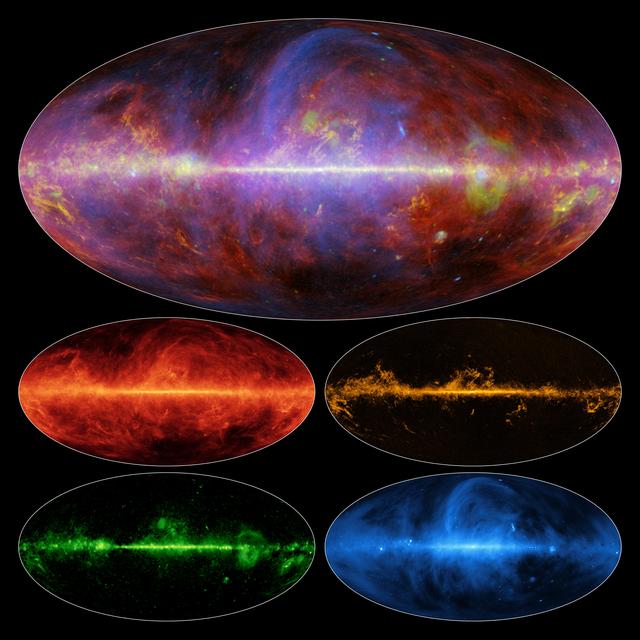
Ver en NASA ↗In the last century, humans realized that space is filled with types of light we can’t see – from infrared signals released by hot stars and galaxies, to the cosmic microwave background that comes from every corner of the universe. Some of this invisible ligh…
Ver en NASA ↗The Ionospheric Connection Explorer, or ICON, will study the dynamic zone high in our atmosphere where Earth weather and space weather meet — a region that plays a major role in the safety of our satellites and reliability of communications signals.
Ver en NASA ↗Pegasus ICON Rollout (Aft View)
Ver en NASA ↗ICON Spacecraft Mate at Vandenberg Air Force Base
Ver en NASA ↗ICON arrives at Vandenberg Air Force Base
Ver en NASA ↗On the cusp of our atmosphere live a thin group of seasonal electric blue clouds. Forming fifty miles above the poles in summer, these clouds are known as noctilucent clouds or polar mesospheric clouds — PMCs. A recent NASA long-duration balloon mission obser…
Ver en NASA ↗Our planet is nestled in the center of two doughnut-shaped regions of powerful, dynamic radiation: the Van Allen belts, where high-energy particles are trapped by Earth’s magnetic field. Depending on incoming radiation from the sun, they can gain energetic pa…
Ver en NASA ↗Earth is surrounded by a protective magnetic environment — the magnetosphere —shown here in blue, which deflects a supersonic stream of charged particles from the Sun, known as the solar wind. As the particles flow around the Earth’s magnetosphere, it forms a…
Ver en NASA ↗The Global-scale Observations of the Limb and Disk, or GOLD, instrument launches aboard a commercial communications satellite in January 2018 to inspect the dynamic intermingling of space and Earth’s uppermost atmosphere. Together, GOLD and another NASA missi…
Ver en NASA ↗LUCY Launch Preview Briefing
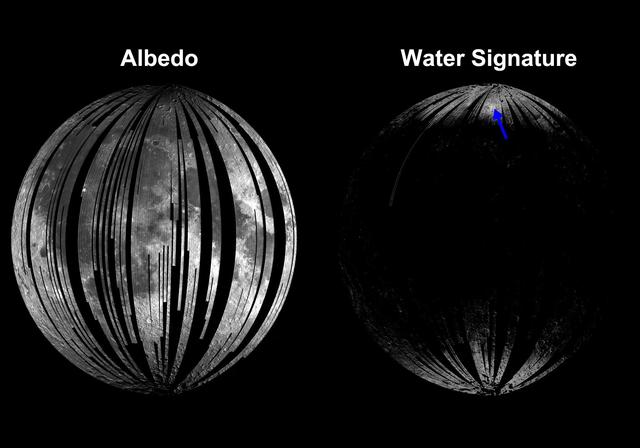
Ver en NASA ↗Deep in the craters of the Moon's south pole lurk permanently shadowed regions: areas that have not seen sunlight in over two billion years. Now, NASA's Lunar Reconnaissance Orbiter is shedding a new light on some of our satellite's darkest mysteries.
Ver en NASA ↗A total lunar eclipse rises over New Orleans, home of NASA’s Michoud Assembly Facility, in the early morning hours of Tuesday, March 3. A lunar eclipse occurs when Earth passes directly between the Sun and Moon, casting a huge shadow across the Moon’s surface…
Ver en NASA ↗A total lunar eclipse rises over New Orleans, home of NASA’s Michoud Assembly Facility, in the early morning hours of Tuesday, March 3. A lunar eclipse occurs when Earth passes directly between the Sun and Moon, casting a huge shadow across the Moon’s surface…
Ver en NASA ↗A total lunar eclipse rises over New Orleans, home of NASA’s Michoud Assembly Facility, in the early morning hours of Tuesday, March 3. A lunar eclipse occurs when Earth passes directly between the Sun and Moon, casting a huge shadow across the Moon’s surface…
Ver en NASA ↗One minute data visualization of the Artemis II lunar flyby. The Moon appears closer and closer as the screen shows what the crew will observe through the windows of the Orion spacecraft during the Artemis II mission. Several lunar features are visible.
Ver en NASA ↗On April 8, 2024, a total solar eclipse will travel through Mexico, cross the United States from Texas to Maine, and exit North America along Canada’s Atlantic coast. A total solar eclipse occurs when the Moon passes between the Sun and Earth and briefly cov…
Ver en NASA ↗NASA's IMAP (Interstellar Mapping and Acceleration Probe) mission, the Carruthers Geocorona Observatory, and NOAA's Space Weather Follow On–Lagrange 1 (SWFO-L1) observatory are targeting lift off from Kennedy Space Center aboard a SpaceX Falcon 9 rocket at 7:…
Ver en NASA ↗Contenido y metadatos proporcionados por la NASA Image and Video Library.