





/NASA’s%20Artemis%20III%20Announcement%20(Official%20NASA%20Trailer)~thumb.jpg)


NASA's NuSTAR has identified a candidate pulsar in Andromeda, the nearest large galaxy to the Milky Way. This likely pulsar is brighter at high energies than the Andromeda galaxy entire black hole population.
Ver en NASA ↗🚀 Biblioteca espacial oficial
Imágenes y vídeos de NASA
Explora el catálogo multimedia público de NASA sin salir de TuPortalNews.
Explora temas destacados
Selecciona un tema o realiza una búsqueda personalizada.
629 resultados en NASA
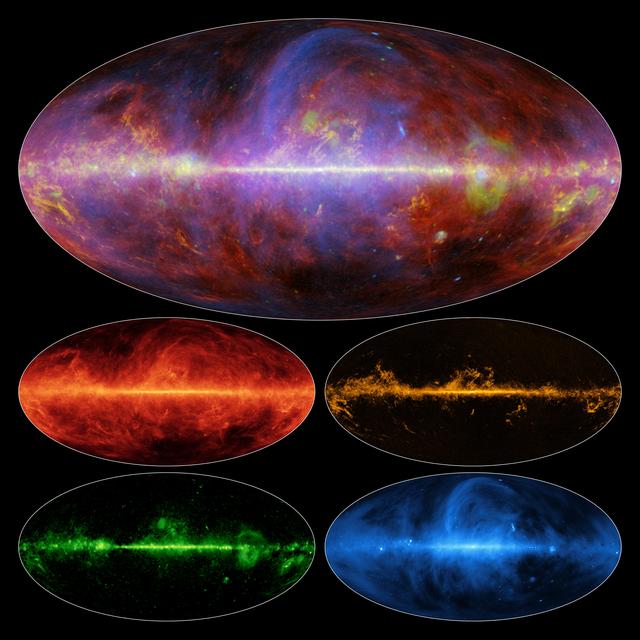
This panoramic view encompasses the entire sky as seen by Two Micron All-Sky Survey. This image is centered on the core of our own Milky Way galaxy, toward the constellation of Sagittarius.
Ver en NASA ↗In this 30 second exposure, a meteor streaks across the sky during the annual Perseid meteor shower, Wednesday, Aug. 11, 2021, in Spruce Knob, West Virginia. Photo Credit: (NASA/Bill Ingalls)
Ver en NASA ↗In this 30 second exposure, a meteor streaks across the sky during the annual Perseid meteor shower, Tuesday, Aug. 10, 2021, in Spruce Knob, West Virginia. Photo Credit: (NASA/Bill Ingalls)
Ver en NASA ↗In this 30 second exposure, a meteor streaks across the sky during the annual Perseid meteor shower, Wednesday, Aug. 11, 2021, in Spruce Knob, West Virginia. Photo Credit: (NASA/Bill Ingalls)
Ver en NASA ↗In this 30 second exposure, a meteor streaks across the sky during the annual Perseid meteor shower, Wednesday, Aug. 11, 2021, in Spruce Knob, West Virginia. Photo Credit: (NASA/Bill Ingalls)
Ver en NASA ↗The immense Andromeda galaxy, also known as Messier 31, is captured in full in this image from NASA Wide-field Infrared Survey Explorer. Andromeda is the closest large galaxy to our Milky Way galaxy, and is located 2.5 million light-years from our sun.
Ver en NASA ↗This artist diagram shows the Smith Cloud as it arcs out of the plane of our Milky Way galaxy, then returning like a boomerang. Hubble Telescope measurements that it came out of a region near the edge of the galaxy disk of stars 70 million years ago
Ver en NASA ↗Hot stars burn brightly in this new image from NASA Galaxy Evolution Explorer, showing the ultraviolet side of a familiar face. Approximately 2.5 million light-years away, the Andromeda galaxy, or M31, is our Milky Way largest galactic neighbor.
Ver en NASA ↗NASA Wide-field Infrared Survey Explorer mission presents the Wreath nebula. The nebula official name is Barnard 3, or IRAS Ring G159.6-18.5. Regions similar to this nebula are found near the band of the Milky Way galaxy in the night sky.
Ver en NASA ↗In the Perseus spiral arm of the Milky Way galaxy, opposite the galactic center, lies the nebula SH 2-235. As seen in infrared light, NASA Wide-field Infrared Survey Explorer reveals SH 2-235 to be a huge star formation complex.
Ver en NASA ↗This image from ESA Herschel Space Observatory reveals a suspected ring at the center of our galaxy is warped for reasons scientists cannot explain. The ring is twisted so that part of it rises above and below the plane of our Milky Way galaxy.
Ver en NASA ↗This mosaic of images from NASA WISE Telescope is in the constellation of Cassiopeia. This region contains a large star forming nebula within the Milky Way Galaxy, sometimes called the Heart Nebula, and is over 6 thousand light-years from Earth.
Ver en NASA ↗The image on the left shows an infrared view of the center of our Milky Way galaxy as seen by the 1983 Infrared Astronomical Satellite, which surveyed the whole sky with only 62 pixels. The image on the right shows an infrared view similar to what NASA
Ver en NASA ↗This image from NASA Galaxy Evolution Explorer shows the galaxy NGC 4569 in the constellation Virgo. It is one of the largest and brightest spiral galaxies found in the Virgo cluster of galaxies, the nearest major galaxy cluster to our Milky Way galaxy.
Ver en NASA ↗NASA Wide-field Infrared Survey Explorer, captured this image of a star-forming cloud of dust and gas located in the constellation of Monoceros. Sh2-284 is relatively isolated at the very end of an outer spiral arm of our Milky Way galaxy.
Ver en NASA ↗RCW 108 is a region where stars are actively forming within the Milky Way galaxy about 4,000 light years from Earth. This image is part of a large collection of images of merging galaxies taken by NASA Hubble Space Telescope.
Ver en NASA ↗This image from NASA Herschel, was taken looking towards a region of our Milky Way galaxy in the Eagle constellation, closer to the galactic center than our sun. Here, we see the outstanding end products of the stellar assembly line.
Ver en NASA ↗This infrared image from NASA Spitzer Space Telescope shows N103B -- all that remains from a supernova that exploded a millennium ago in the Large Magellanic Cloud, a satellite galaxy 160,000 light-years away from our own Milky Way.
Ver en NASA ↗In this new view of the Andromeda, also known as M31, galaxy from the Herschel space observatory, cool lanes of forming stars are revealed in the finest detail yet. M31 is the nearest major galaxy to our own Milky Way at a distance of 2.5 million light-ye
Ver en NASA ↗This infrared portrait of the Small Magellanic Cloud, taken by NASA Spitzer Space Telescope, reveals the stars and dust in this galaxy as never seen before. This nearby satellite galaxy to our Milky Way galaxy is some 200,000 light-years away.
Ver en NASA ↗This composite image, combining data from NASA Chandra X-ray Observatory and Spitzer Space Telescope shows the star-forming cloud Cepheus B, located in our Milky Way galaxy about 2,400 light years from Earth
Ver en NASA ↗This map illustrates the numerous star-forming clouds, called cold cores, that European Space Agency Planck observed throughout our Milky Way galaxy. Planck detected around 10,000 of these cores, thousands of which had never been seen before.
Ver en NASA ↗738D6468.NEF
Ver en NASA ↗Contenido y metadatos proporcionados por la NASA Image and Video Library.