





/NASA’s%20Artemis%20III%20Announcement%20(Official%20NASA%20Trailer)~thumb.jpg)

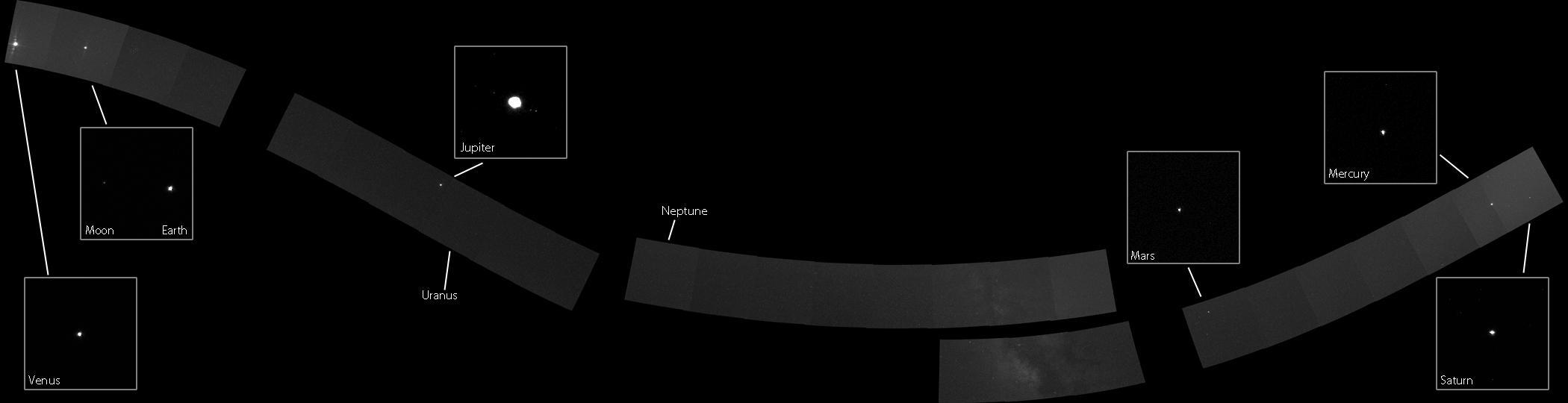
The cameras of Voyager 1 on Feb. 14, 1990, pointed back toward the sun and took a series of pictures of the sun and the planets, making the first ever portrait of our solar system as seen from the outside.
Ver en NASA ↗🚀 Biblioteca espacial oficial
Imágenes y vídeos de NASA
Explora el catálogo multimedia público de NASA sin salir de TuPortalNews.
Explora temas destacados
Selecciona un tema o realiza una búsqueda personalizada.
112 resultados en NASA
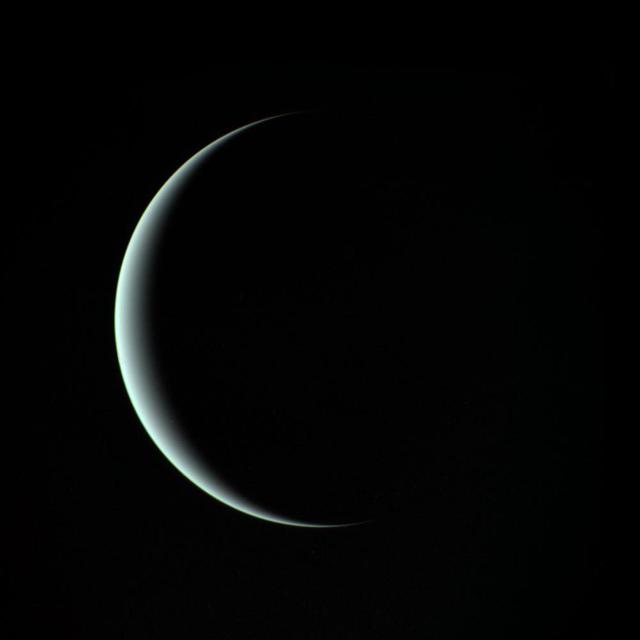
Range: 72.3 million km. ( 44.9 million miles ) P-29314B/W This Voyager 2 photograph of Uranus shows the planets outermost, or epsilon, ring. This is a computerized summation of six images shot by the narrow angle camera. It is the first photo to show the ep…
Ver en NASA ↗These six narrow-angle color images were made from the first ever portrait of the solar system taken by NASA’s Voyager 1, which was more than 4 billion miles from Earth and about 32 degrees above the ecliptic.
Ver en NASA ↗P-29521 BW Range: 557,000 kilometers ( 346, 000 miles) The southern hemisphere of Umbriel displays heavy cratering in this Voyager 2 image. This frame, taken through the clear-filter of Voyager's narrow-angle camera, is the most detailed image of Umbriel, wit…
Ver en NASA ↗P-29519BW Range: 500,000 kilometers (300,000 miles) Several craters are seen on the surface of 1986U1, one of the several small moons of Uranus discovered by Voyager 2. This single image, a clear-filtered, narrow-angle picture with a resolution of about 10 k…
Ver en NASA ↗P-29522BW Range: 369,000 kilometers (229,000 miles) This is the highest-resolution picture of Titania returned by Voyager 2. The picture is a composite of two images taken through the clear-filter of Voyager's narrow-angle camera. The resolution of this image…
Ver en NASA ↗Range : 4.1 million km. ( 2.5 million miles ) P-29466B/W Voyager 2 has discovered two 'shepard' satellites associated with the rings of Uranus. The two moons, designated 1986U7 and 1986U8, are seen here on either side of the bright Epsilon Ring. All nine of…
Ver en NASA ↗P-29520 BW Range: 130,000 kilometers (80,000 miles) This mosaic, taken through the clear-filter, narrow-angle camera, of the four highest-resolution images of Ariel represents the most detailed Voyager 2 picture of this satellite of Uranus. Ariel is about 1,2…
Ver en NASA ↗4.17 million miles (2.59 million miles) Resolution : 40 km. (25mi.) P-29498C This false color, Voyager 2 composite view of all nine of Uranian rings was made from six 15 second exposures through the narrow angle camera. The special computer processing used…
Ver en NASA ↗Range : 12.9 million miles (8.0 million miles) P-29468C This false color Voyager photograph of Uranus shows a discrete cloud seen as a bright streak near the planets limb. The cloud visible here is the most prominent feature seen in a series of Voyager images…
Ver en NASA ↗The National Aeronautics and Space Administration (NASA) Lewis Research Center’s Launch Vehicle Directorate in front of a full-scale model of the Centaur second-stage rocket. The photograph was taken to mark Centaur’s fiftieth launch. NASA Lewis managed the C…
Ver en NASA ↗Range : 147,000 km. ( 91,000 mi. ) Resolution : 2.7 km. ( 1.7 mi. ) P-29524C this Voyager 2 color image of the Uranian satellite, Miranda is a composite of three shots taken through green, violet, and ultraviolet filters from the narrow angle camera. It is …
Ver en NASA ↗This image, taken by the NASA/ESA Hubble Space Telescope, shows the colorful "last hurrah" of a star like our sun. The star is ending its life by casting off its outer layers of gas, which formed a cocoon around the star's remaining core. Ultraviole…
Ver en NASA ↗This image from NASA's New Horizons spacecraft shows an overlay of the first official Pluto feature names.
Ver en NASA ↗New imagery from the Hubble Space Telescope is revealing details never before seen on Jupiter. Hubble’s new Jupiter maps were used to create this Ultra HD animation. These new maps and spinning globes of Jupiter were made from observations performed with NAS…
Ver en NASA ↗New imagery from the Hubble Space Telescope is revealing details never before seen on Jupiter. Hubble’s new Jupiter maps were used to create this Ultra HD animation. These new maps and spinning globes of Jupiter were made from observations performed with NAS…
Ver en NASA ↗Contenido y metadatos proporcionados por la NASA Image and Video Library.