





/NASA’s%20Artemis%20III%20Announcement%20(Official%20NASA%20Trailer)~thumb.jpg)

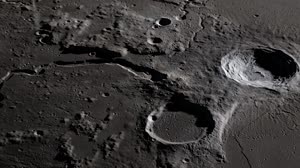
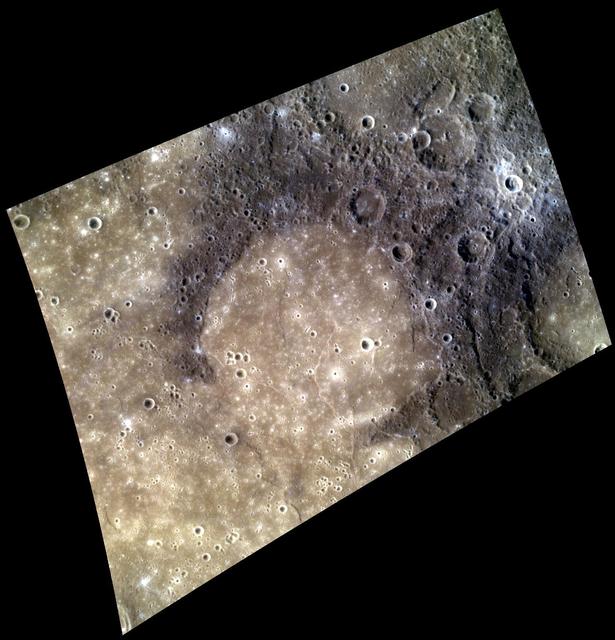
This image, from NASA Mariner 10 spacecraft which launched in 1974, shows hilly and lineated terrain and a patch of smooth plains in a large degraded crater.
Ver en NASA ↗🚀 Biblioteca espacial oficial
Imágenes y vídeos de NASA
Explora el catálogo multimedia público de NASA sin salir de TuPortalNews.
Explora temas destacados
Selecciona un tema o realiza una búsqueda personalizada.
2.907 resultados en NASA
This image, from NASA Mariner 10 spacecraft which launched in 1974, shows several scarps, which appear to be confined to crater floors. The scarp in the crater at the upper left of the image has been diverted by the central peaks.
Ver en NASA ↗This image, from NASA Mariner 10 spacecraft which launched in 1974, features a 140 kilometer diameter crater and its surrounding zone of secondary craters. T
Ver en NASA ↗This image, from NASA Mariner 10 spacecraft which launched in 1974, is located about 500 km east of the Caloris basin and shows hummocky plains interpreted as Caloris ejecta in the upper half of the picture and smooth plains in the lower half.
Ver en NASA ↗This image, from NASA Mariner 10 spacecraft which launched in 1974, shows plains filling this basin are uniformly brighter and slightly redder than the surrounding cratered terrain.
Ver en NASA ↗The craters in this image NASA Mariner 10 spacecraft, which launched in 1974, have interior rings of mountains and ejecta deposits which are scarred by deep secondary crater chain groves.
Ver en NASA ↗This image, from NASA Mariner 10 spacecraft which launched in 1974, shows young craters superposed on smooth plains. Larger young craters have central peaks, flat floors, terraced walls, and radial ejecta deposits.
Ver en NASA ↗Updated calibration and subsequent mosaicing led to substantial improvements in NASA Mariner 10 color image data; the spacecraft launched in 1974.
Ver en NASA ↗This image, from NASA Mariner 10 spacecraft which launched in 1974, shows an old basin hummocky rim is partly degraded and cratered by later events.
Ver en NASA ↗This image, from NASA Mariner 10 spacecraft which launched in 1974, shows that several west-facing lobate scarps occur in the hummocky plains interpreted as Caloris ejecta.
Ver en NASA ↗This image, from NASA Mariner 10 spacecraft which launched in 1974, shows a broadly curved lobate scarp running from left to right in the large crater to the right of center in this image.
Ver en NASA ↗This image, from NASA Mariner 10 spacecraft which launched in 1974, includes part of the floor of the Caloris basin showing the ridges and fractures.
Ver en NASA ↗This image, from NASA Mariner 10 spacecraft which launched in 1974, is a high-resolution picture of a 65-kilometer diameter crater and the scarp transecting its floor.
Ver en NASA ↗This image, from NASA Mariner 10 spacecraft which launched in 1974, shows a crater just north of the Caloris Planitia displays interior and central peaks rising up from a hilly floor.
Ver en NASA ↗This image, from NASA Mariner 10 spacecraft which launched in 1974, is of the northeastern quadrant of the Caloris basin and shows the smooth hills and domes between the inner and outer scarps and the well-developed radial system east of the outer scarp
Ver en NASA ↗This double ring basin top center of image was photographed during NASA Mariner 10 second encounter and shows two craters about 30 km in diameter which have been engulfed by smooth plains on the floor of the inner ring.
Ver en NASA ↗This image, from NASA Mariner 10 spacecraft which launched in 1974, shows a scarp upper left corner of the image about 130 kilometers long cutting two craters older crater is at extreme left corner, younger is diagonally below.
Ver en NASA ↗This artist concept shows a celestial body about the size of our moon slamming at great speed into a body the size of Mercury. NASA Spitzer found evidence that a high-speed collision of this sort occurred a few thousand years ago around a young star.
Ver en NASA ↗This is the first image of Earth ever taken from another planet that actually shows our home as a planetary disk. Because Earth and the Moon are closer to the Sun than Mars, they exhibit phases, just as the Moon, Venus, & Mercury do when viewed from Earth
Ver en NASA ↗KENNEDY SPACE CENTER, FLA. -- Interior view of the Mission Control Center during the launch sequence of Mercury-Atlas 8 MA-8).
Ver en NASA ↗S62-08745 (1962) --- Group packets of ready to eat space food, with size being measured by a ruler, used by Mercury astronauts. Photo credit: NASA
Ver en NASA ↗S61-03705 (1961) --- Close-up view of the fueling of the Liberty Bell 7 for the Mercury-Redstone 4 (MR-4) mission. Photo credit: NASA
Ver en NASA ↗S62-01285 (13 Sept. 1961) --- Earth observations of a shoreline taken from the Mercury-Atlas 4 (MA-4) spacecraft. Photo credit: NASA
Ver en NASA ↗G60-02424 (1960) --- John H. Glenn Jr., one of the seven recently selected Mercury astronauts, participates in a suit-fitting session. Photo credit: NASA
Ver en NASA ↗Contenido y metadatos proporcionados por la NASA Image and Video Library.