





/NASA’s%20Artemis%20III%20Announcement%20(Official%20NASA%20Trailer)~thumb.jpg)

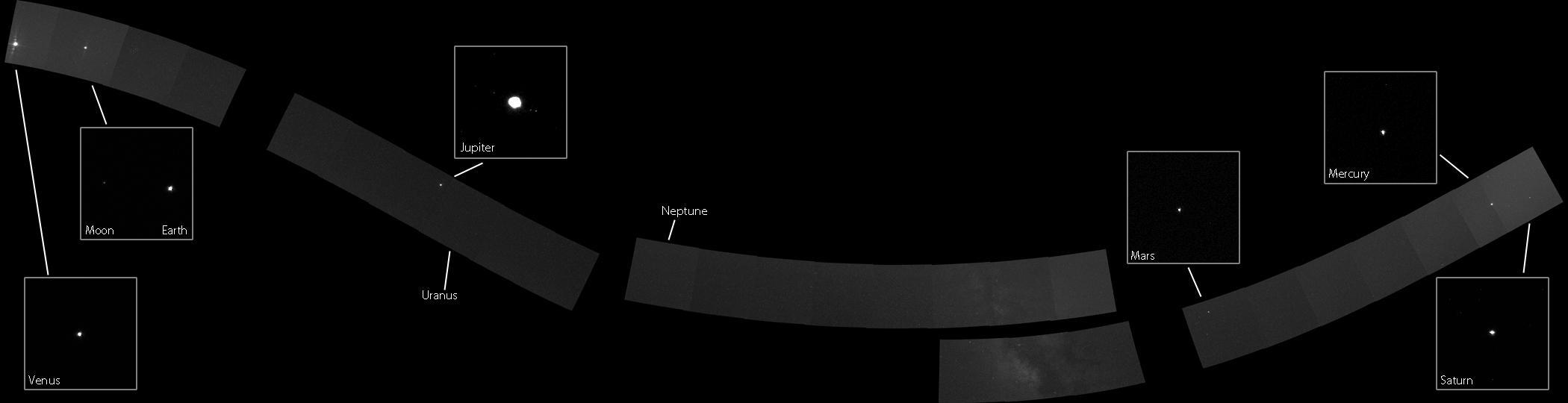
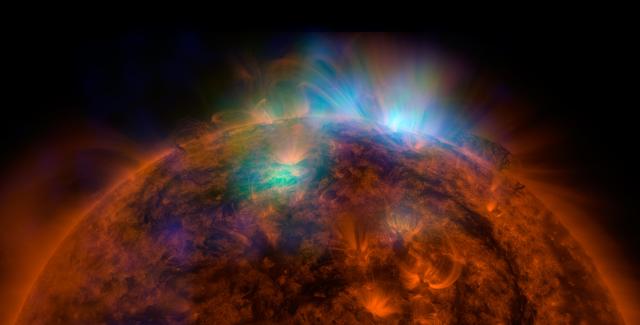
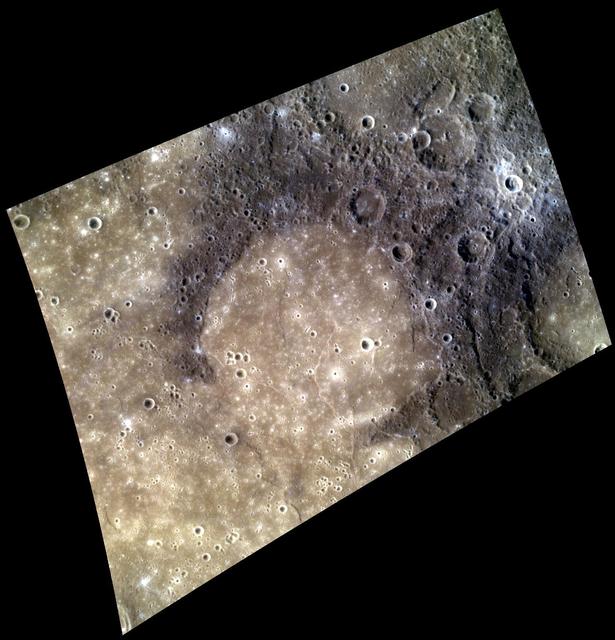
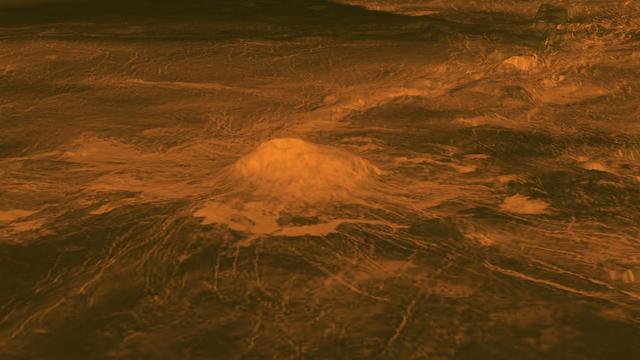
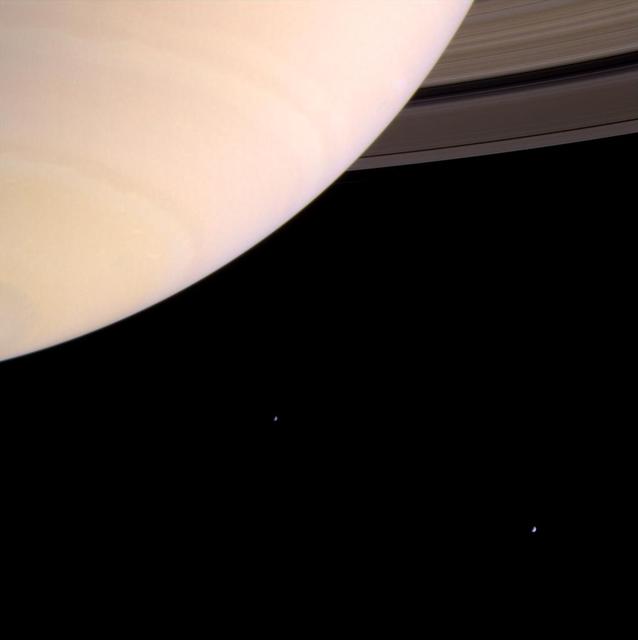
This is a montage of planetary images taken by spacecraft managed by NASA’s Jet Propulsion Laboratory in Pasadena, CA. Included are from top to bottom images of Mercury, Venus, Earth and Moon, Mars, Jupiter, Saturn, Uranus and Neptune.
Ver en NASA ↗🚀 Biblioteca espacial oficial
Imágenes y vídeos de NASA
Explora el catálogo multimedia público de NASA sin salir de TuPortalNews.
Explora temas destacados
Selecciona un tema o realiza una búsqueda personalizada.
265 resultados en NASA
Jupiter, Saturn, Uranus, and Neptune are known as the jovian Jupiter-like planets because they are all gigantic compared with Earth, and they have a gaseous nature. This diagram shows the approximate distance of the jovian planets from the Sun.
Ver en NASA ↗This color photo of Neptune large satellite Triton was obtained on Aug. 24 1989. In reality, there is no part of Triton that would appear blue to the eye. The bright southern hemisphere of Triton, which fills most of this frame, is generally pink.
Ver en NASA ↗NASA Voyager 2 obtained this color image of Neptune largest satellite,Triton, on Aug. 22, 1989. The south pole of Triton is tipped toward the sun and it is summer in the southern hemisphere.
Ver en NASA ↗This view of the volcanic plains of Neptune moon Triton was produced using topographic maps derived from images acquired by NASA Voyager spacecraft during its August 1989 flyby, 20 years ago this week.
Ver en NASA ↗This is a montage of planetary images taken by spacecraft managed by NASA’s Jet Propulsion Laboratory in Pasadena, CA. Included are from top to bottom images of Mercury, Venus, Earth and Moon, Mars, Jupiter, Saturn, Uranus and Neptune.
Ver en NASA ↗A Neptune-size planet with a clear atmosphere is shown crossing in front of its star in this artist depiction. Such crossings, or transits, are observed by telescopes like NASA Hubble and Spitzer to glean information about planets atmospheres.
Ver en NASA ↗These artist concepts show some of the best known objects found outside Neptune orbit. Included are Pluto and fellow plutinos, Kuiper Belt Objects, and an Oort Cloud object.
Ver en NASA ↗NASA Voyager 2 was 530,000 kilometers 330,000 miles from Neptune largest satellite, Triton, when this photo was taken, Aug. 24, 1989. This is the first photo of Triton to reveal surface topography.
Ver en NASA ↗This is an updated montage of planetary images taken by spacecraft managed by NASA’s Jet Propulsion Laboratory in Pasadena, CA. Included are from top to bottom images of Mercury, Venus, Earth and Moon, Mars, Jupiter, Saturn, Uranus and Neptune.
Ver en NASA ↗This simulated voyage over the surface of Neptune large moon Triton was produced using topographic maps derived from images acquired by NASA Voyager spacecraft during its August 1989 flyby, 20 years ago this week.
Ver en NASA ↗This image, taken by NASA Voyager 2 early in the morning of Aug. 23, 1989, is a false color image of Triton, Neptune largest satellite; mottling in the bright southern hemisphere is present.
Ver en NASA ↗Scientists were excited to discover clear skies on a relatively small planet, about the size of Neptune, using the combined power of NASA Hubble, Spitzer and Kepler space telescopes.
Ver en NASA ↗This image from NASA's Voyager 2 of the south polar terrain of Triton, was taken on Aug. 25, 1989 revealing about 50 dark plumes or 'wind streaks' on the icy surface.
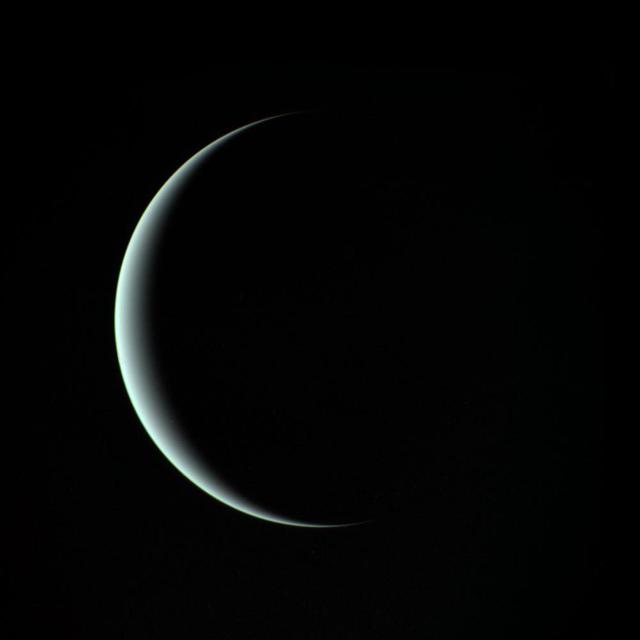
Ver en NASA ↗Range : 4.86 million km (3 million mi.) This dramatic view of the crescents of Neptune and Triton was acquired by Voyager 2 approx. 3 days, 6 1/2 hours after its closest approach to Neptune. The space craft was pluging southward at an angle of 48 degrees to…
Ver en NASA ↗The bright cirrus-like clouds of Neptune change rapidly, often forming and dissipation over periods of several to tens of hours. In this sequence spanning two rotations of Neptune (about 36 hours) Voyager 2 observed cloud evolution in the region around the G…
Ver en NASA ↗This is one of the most detailed views of the surface of Triton taken by NASA Voyager 2 on its flyby of the large satellite of Neptune early in the morning of Aug. 25, 1989. The picture was stored on the tape recorder and relayed to Earth later.
Ver en NASA ↗Art by Don Davis Pioneer 10 looking back at the Sun from Neptune's orbit as it becomes the first spacecraft to leave the Solar system
Ver en NASA ↗This artist concept depicts 55 Cancri e as it orbits its star. NASA Spitzer Space Telescope has, for the first time, captured the light emanating from a distant super Earth, a planet more massive than Earth but lighter than Neptune.
Ver en NASA ↗This artist concept illustrates a hot, Neptune-sized planet called GJ 436b. NASA Spitzer Space Telescope has found evidence that GJ 436b, orbiting a star beyond our sun lacks methane -- an ingredient common to many planets in our own solar system.
Ver en NASA ↗NASA Voyager 2 took this picture of Neptune largest satellite,Triton, from less than 80,000 km 50,000 miles. The image shows an area in Triton northern hemisphere. The Sun is just above the horizon, so features cast shadows that accentuate height
Ver en NASA ↗P-34715 Range: 900,000 kilometers (560,000 miles) This post-encounter view of the south pole of Neptune was obtained after Voyager 2 passed the planet and sped away on a southward-trending trajectory. Voyager's wide-angle camera saw features as small as 120 k…
Ver en NASA ↗P-34630 Range: 10.5 million kilometers (6.5 million miles) This cylindrical projection view of Neptune uses five narrow-angle images equally spaced around the planet. They were taken by Voyager 2 over the course of a Neptunian day, an interval of about 18 hou…
Ver en NASA ↗Range : 12 million km (7.5 million miles) Resolution 110 km (68 miles) per pixel. These 2 images of Neptune were taken by Voyager 2's narrow-angle camera. During the 17.6 hours between the left and right images, the Great Dark Spot, at 22 degrees south lati…
Ver en NASA ↗Contenido y metadatos proporcionados por la NASA Image and Video Library.