





/NASA’s%20Artemis%20III%20Announcement%20(Official%20NASA%20Trailer)~thumb.jpg)

These images from NASA Dawn spacecraft are located in asteroid Vesta Sextilia quadrangle, in Vesta southern hemisphere. The dark rays of the small crater to the bottom right of Laelia are particularly spectacular in the right image.
Ver en NASA ↗🚀 Biblioteca espacial oficial
Imágenes y vídeos de NASA
Explora el catálogo multimedia público de NASA sin salir de TuPortalNews.
Explora temas destacados
Selecciona un tema o realiza una búsqueda personalizada.
3.592 resultados en NASA
This image from NASA Dawn spacecraft shows a raised mound material overlying the brighter material that makes up the floor of the south polar depression of asteroid Vesta. Many small scale craters are clear in this image.
Ver en NASA ↗This anaglyph shows the central complex in asteroid Vesta Rheasilvia impact basin. The central complex about two and a half times taller than Mt. Everest. You need 3-D glasses to view this image.
Ver en NASA ↗These images from NASA Dawn spacecraft are located in asteroid Vesta Gegania quadrangle, just south of Vesta equator. Rubria is the crater with dark and bright material above Divalia Fossa and Occia is the crater with bright and dark material below.
Ver en NASA ↗This image from NASA Dawn spacecraft of asteroid Vesta shows the characteristic undulating surface of Vesta southern hemisphere and many small craters, some of which make up secondary crater chains.
Ver en NASA ↗This image of asteroid Vesta from NASA Dawn spacecraft shows an area of the surface that is both grooved and smooth, which gives it an undulating appearance. This image is located in Vesta Numisia quadrangle, near the Vestan equator.
Ver en NASA ↗The eastern rim of this unnamed crater in Claritas Fossae is very degraded, as seen in this image from NASA Mars Odyssey, indicating that it very ancient and has been subjected to erosion and bombardment from impactors such as asteroids and comets.
Ver en NASA ↗This anaglyph shows the topography of Vesta eastern hemisphere; equatorial troughs are visible around asteroid Vesta equator and north of these troughs there are a number of highly degraded, old, large craters. You need 3-D glasses to view this image.
Ver en NASA ↗This image, one of the first obtained by NASA Dawn spacecraft in its low altitude mapping orbit, shows part of the rim of a fresh crater on the giant asteroid Vesta. The terrain is known as the Heavily Cratered Terrain in the northern hemisphere.
Ver en NASA ↗This image from NASA Dawn spacecraft shows a large number of craters, formed by collisions into the surface of asteroid Vesta. The relatively large circular depressions in this image are older, heavily degraded impact craters.
Ver en NASA ↗This view of the topography of asteroid Vesta surface is composed of several images obtained with the clear filter in the framing camera on NASA Dawn spacecraft on August 6, 2011. The image has a resolution of about 260 meters per pixel.
Ver en NASA ↗This artist concept shows NASA Dawn spacecraft arriving at the dwarf planet Ceres, the most massive body in the asteroid belt. Dawn is the first mission to visit a dwarf planet.
Ver en NASA ↗These images from NASA Dawn spacecraft, located in asteroid Vesta Marcia quadrangle, in Vesta northern hemisphere, demonstrate a special analytical technique, which results in shadowed areas of Vesta surface becoming illuminated.
Ver en NASA ↗This false-color image reveals the scar of a past major impact of a comet or small asteroid on Europa surface. A city-sized impact crater was viewed by NASA Galileo spacecraft.
Ver en NASA ↗These images from NASA Dawn spacecraft show Urbinia crater on asteroid Vesta. Urbinia crater is distinctive because is has an irregularly shaped rim due to the formation of other impact craters along its rim and then subsequent erosion.
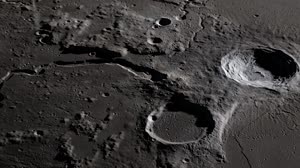
Ver en NASA ↗This image from NASA Dawn spacecraft shows many craters of different sizes and states of preservation on asteroid Vesta surface. In the top of the image there are four large, very degraded craters.
Ver en NASA ↗In this image of the asteroid Vesta, taken by NASA Dawn spacecraft just shortly before the beginning of high altitude mapping orbit, north is up and the upper right corner is to the northeast.
Ver en NASA ↗In this contrast-enhanced infrared image of Bellicia Crater on the giant asteroid Vesta, scientists from NASA Dawn mission can see signs of the mineral olivine. Olivine was not expected to be found at Bellicia.
Ver en NASA ↗This artist concept shows the immediate aftermath of a large asteroid impact around NGC 2547-ID8, a 35-million-year-old sun-like star thought to be forming rocky planets.
Ver en NASA ↗This image from NASA Dawn spacecraft of asteroid Vesta shows Rubria and Occia craters. Both Rubria and Occia contain dark and bright material and both have reasonably sharp, well-defined and regularly shaped rims.
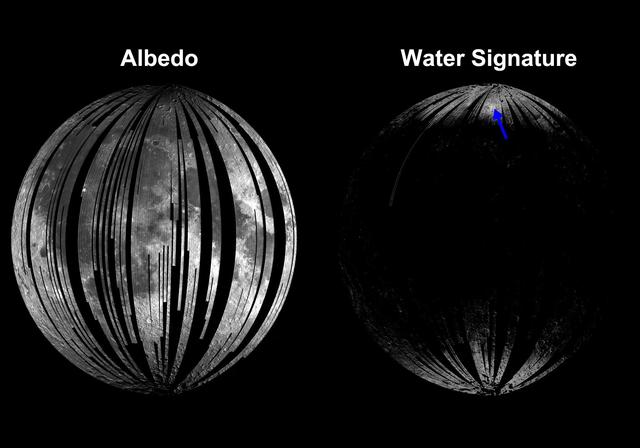
Ver en NASA ↗This image shows that NASA Dawn mission detected abundances of hydrogen in a wide swath around the equator of the giant asteroid Vesta. The hydrogen probably exists in the form of hydroxyl or water bound to minerals in Vesta surface.
Ver en NASA ↗This still from an animation made from data obtained by NASA Dawn spacecraft shows the topography of a portion of the wall and interior of the Rheasilvia impact basin in asteroid Vesta south-polar region.
Ver en NASA ↗This image from NASA Dawn spacecraft shows a part of asteroid Vesta surface that is covered by heavily cratered regolith. Regolith is the fine-grained material that covers most of Vesta surface.
Ver en NASA ↗This image from NASA Dawn spacecraft of asteroid Vesta shows a long chain of craters in the right part of the image, located in Vesta Caparronia quadrangle, in Vesta northern hemisphere.
Ver en NASA ↗Contenido y metadatos proporcionados por la NASA Image and Video Library.