






/NASA’s%20Artemis%20III%20Announcement%20(Official%20NASA%20Trailer)~thumb.jpg)

Lockheed Martin Recovery Specialist Levi Hanish, left, and Lockheed Martin Recovery Specialist Michael Kaye, right, transfer the sample return capsule from NASA’s OSIRIS-REx mission to a cradle, Sunday, Sept. 24, 2023, shortly after the capsule landed at the …
Ver en NASA ↗🚀 Biblioteca espacial oficial
Imágenes y vídeos de NASA
Explora el catálogo multimedia público de NASA sin salir de TuPortalNews.
Explora temas destacados
Selecciona un tema o realiza una búsqueda personalizada.
3.592 resultados en NASA
From left to right, NASA Sample Return Capsule Science Lead Scott Sandford, NASA Astromaterials Curator Francis McCubbin, and University of Arizona OSIRIS-REx Principal Investigator Dante Lauretta, collect science data, Sunday, Sept. 24, 2023, shortly after t…
Ver en NASA ↗Recovery team members prepare the sample return capsule from NASA’s OSIRIS-REx mission for transport to the cleanroom, Sunday, Sept. 24, 2023, shortly after the capsule landed at the Department of Defense's Utah Test and Training Range. The sample was collect…
Ver en NASA ↗From left to right, Lockheed Martin Mission Operations Assurance Lead Graham Miller, Lockheed Martin Recovery Specialist Michael Kaye, and Lockheed Martin Recovery Specialist Levi Hanish, prepare the sample return capsule from NASA’s OSIRIS-REx mission for tr…
Ver en NASA ↗This partial frame from an animation was generated using radar data collected by the National Science Foundation 1,000-foot 305-meter Arecibo Observatory in Puerto Rico.
Ver en NASA ↗This montage of 14 images the time order is right to left, bottom to top shows asterpod Ida as it appeared in the field of view of NASA Galileo camera on August 28, 1993.
Ver en NASA ↗In this illustration, an asteroid (bottom left) breaks apart under the powerful gravity of LSPM J0207+3331, the oldest, coldest white dwarf known to be surrounded by a ring of dusty debris.
Ver en NASA ↗NASA Office of Communications Senior Science Communications Officer Karen Fox introduces, from left to right, NASA Planetary Science Division Director Lori Glaze, University of Arizona OSIRIS-REx Principal Investigator Dante Lauretta, NASA OSIRIS-REx Deputy P…
Ver en NASA ↗This frame from a movie shows the progression of NASA Near-Earth Object Wide-field Survey Explorer NEOWISE investigation for the mission first two years following its restart in December 2013. Green circles represent near-Earth objects.
Ver en NASA ↗NASA NEOWISE spacecraft opened its eyes after more than two years of slumber to see the starry sky with the same clarity achieved during its prime mission. This image shows a patch of sky in the constellation Pisces.
Ver en NASA ↗A NASA team prepares the agency’s Psyche spacecraft for launch inside the Astrotech Space Operations Facility near Kennedy Space Center in Florida on July 15, 2023. Psyche will launch atop a SpaceX Falcon Heavy rocket from Launch Complex 39A at Kennedy to exp…
Ver en NASA ↗A NASA team prepares the agency’s Psyche spacecraft for launch inside the Astrotech Space Operations Facility near Kennedy Space Center in Florida on July 15, 2023. Psyche will launch atop a SpaceX Falcon Heavy rocket from Launch Complex 39A at Kennedy to exp…
Ver en NASA ↗A NASA team prepares the agency’s Psyche spacecraft for launch inside the Astrotech Space Operations Facility near Kennedy Space Center in Florida on July 15, 2023. Psyche will launch atop a SpaceX Falcon Heavy rocket from Launch Complex 39A at Kennedy to exp…
Ver en NASA ↗Lockheed Martin Program Manager Sandy Freund, second from left, answers questions from reporters during an OSIRIS-REx sample return press conference, Wednesday, Aug. 30, 2023, at the Department of Defense's Utah Test and Training Range. The sample was collect…
Ver en NASA ↗This colorized image from the visible and infrared mapping spectrometer onboard NASA Dawn spacecraft shows temperature variations at Tarpeia crater, near the south pole of the giant asteroid Vesta.
Ver en NASA ↗This anaglyph image from NASA Dawn spacecraft shows the topography of the mountain-central complex in asteroid Vesta south polar region. You need 3D glasses to view this image.
Ver en NASA ↗In this image from NASA Dawn spacecraft, bright material extends out from the crater Canuleia on asteroid Vesta. The bright material appears to have been thrown out of the crater during the impact that created it.
Ver en NASA ↗This non-circular pit seen in this image from NASA Mars Reconnaissance Orbiter is due to a low angle impact from an asteroid or comet. The raised plateau west of the crater was where most of the impact debris landed.
Ver en NASA ↗This image of asteroid Vesta from NASA Dawn spacecraft shows an old, very degraded crater that is almost completely filled with regolith. Regolith is the fine-grained material that covers most of Vesta surface.
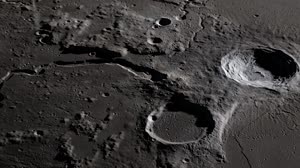
Ver en NASA ↗NASA Dawn spacecraft obtained this image of a young and old crater at the night and day boundary on asteroid Vesta. The image has a resolution of about 260 meters per pixel.
Ver en NASA ↗The impact of an asteroid or comet several hundred million years ago left scars in the landscape that are still visible in this spaceborne radar image of an area in the Sahara Desert of northern Chad.
Ver en NASA ↗This image, one of the first obtained by NASA Dawn spacecraft in its low altitude mapping orbit, shows an area within the Rheasilvia basin in the south polar area of the giant asteroid Vesta.
Ver en NASA ↗This map shows the distribution of dark materials throughout the southern hemisphere of the giant asteroid Vesta. The circles, diamonds, and stars show where the dark material appears in craters, spots and topographic highs.
Ver en NASA ↗This perspective view of Marcia crater on the giant asteroid Vesta shows the most spectacularly preserved example of pitted terrain, an unexpected discovery in data returned by NASA Dawn mission.
Ver en NASA ↗Contenido y metadatos proporcionados por la NASA Image and Video Library.