






/NASA’s%20Artemis%20III%20Announcement%20(Official%20NASA%20Trailer)~thumb.jpg)


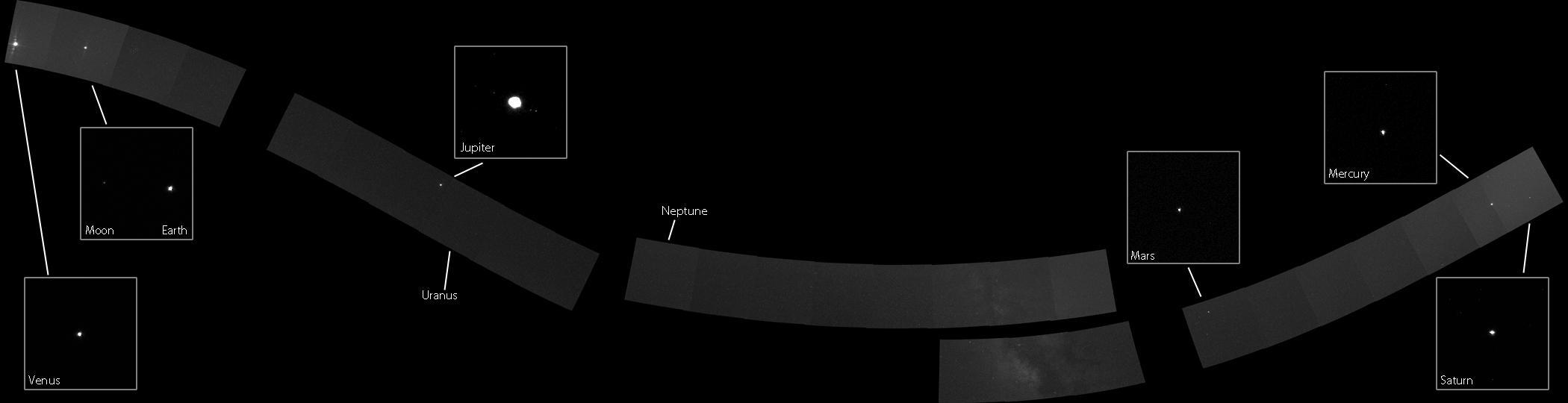
Jupiter and its Galilean Satellites as viewed from Mars
Ver en NASA ↗🚀 Biblioteca espacial oficial
Imágenes y vídeos de NASA
Explora el catálogo multimedia público de NASA sin salir de TuPortalNews.
Explora temas destacados
Selecciona un tema o realiza una búsqueda personalizada.
26.836 resultados en NASA
MarCO-B, one of the experimental Mars Cube One (MarCO) CubeSats, took these images as it approached Mars, just before NASA's InSight spacecraft landed on the planet.
Ver en NASA ↗These dark streaks, also known as slope streaks, resulted from dust avalanches on Mars. The HiRISE camera aboard NASA's Mars Reconnaissance Orbiter captured them on Dec. 26, 2017.
Ver en NASA ↗This image indicated NASA Phoenix Mars Lander landing area on Mars to a topographical map indicating relative elevations in the landing region prior to landing. The elevations could have affected wind patterns at the site.
Ver en NASA ↗This view of Lyot Crater is a combined mapping by NASA Project Viking with elevation information from Mars Global Surveyor showing at least one of the nine craters in the northern lowlands of Mars with exposures of hydrated minerals detected from orbit.
Ver en NASA ↗Members from the NASA Mars Helicopter project discuss the sequence of events for the day's flight testing. The image was taken Jan. 18, 2019.
Ver en NASA ↗This image from the Chemistry and Camera ChemCam instrument on NASA Curiosity Mars rover shows detailed texture of a rock target called Yellowjacket on Mars Mount Sharp.
Ver en NASA ↗This photomontage shows each of the sample tubes deposited by NASA's Perseverance Mars rover at the Three Forks sample depot, as viewed by the WATSON camera on the end of the rover's robotic arm.
Ver en NASA ↗New results from the Sample Analysis at Mars, or SAM, instrument on NASA Curiosity rover detected about 2,000 times as much argon-40 as argon-36, which weighs less, confirming the connection between Mars and Martian meteorites found on Earth.
Ver en NASA ↗This image acquired on October 30, 2021 by NASA's Mars Reconnaissance Orbiter, shows depressions, found near the northern edge of the ancient highlands, that have fractures indicating collapse toward their centers.
Ver en NASA ↗The High-Resolution Imaging Science Experiment (Hi-RISE) camera aboard NASA's Mars Reconnaissance Orbiter captured this avalanche plunging down a 1,640-foot-tall (500-meter-tall) cliff on May 29, 2019.
Ver en NASA ↗Artist concept of NASA's 2001 Mars Odyssey orbit insertion.
Ver en NASA ↗The style of erosion along the highlands-lowlands boundary of southern Elysium Planitia has produced a strange pattern of troughs that look like the skin of a reptile, as seen in this image from NASA Mars Odyssey spacecraft.
Ver en NASA ↗This image shows the surface of Mars, taken by the HiRISE camera on NASA's Mars Reconnaissance Orbiter (MRO) on May 30, 2014. The contrast has been enhanced in this image to better show the region where InSight landed on Nov. 26, 2018.
Ver en NASA ↗This artist concept shows the proposed NASA Mars sample return mission above the red planet.
Ver en NASA ↗The Lincoln penny in this photograph is part of a camera calibration target attached to NASA Mars rover Curiosity.
Ver en NASA ↗This artist concept shows NASA Mars Reconnaissance Orbiter mission over the red planet.
Ver en NASA ↗This image acquired on August 27, 2023 by NASA's Mars Reconnaissance Orbiter shows ridges in Aeolis Planum which tell a story of ancient rivers and a Mars very different to that of today.
Ver en NASA ↗NASA's Mars 2020 Perseverance rover is equipped with two microphones that will capture the sounds during entry, descent, and landing, and sounds on the Martian surface.
Ver en NASA ↗This illustration shows a concept for multiple robots that would team up to ferry to Earth samples of rocks and soil being collected from the Martian surface by NASA's Mars Perseverance rover.
Ver en NASA ↗This photo taken in the Mars Yard at NASA's JPL, Pasadena, California, on Aug. 1, 2017, shows a step in development of possible alternative techniques that NASA's Curiosity Mars rover might be able to use to resume drilling into rocks on Mars.
Ver en NASA ↗To receive the same amount of starlight as Mars receives from our Sun, a planet orbiting an M-type red dwarf would have to be positioned much closer to its star than Mercury is to the Sun.
Ver en NASA ↗NASA's Perseverance Mars rover took this panorama of a proposed landing site for the Mars Sample Return lander that would serve as part of the campaign to bring samples of Mars rock and sediment to Earth.
Ver en NASA ↗This view combines hundreds of images taken during the first several weeks after NASA Phoenix Mars Lander arrived on an arctic plain on Mars. The landing was on May 25, 2008.
Ver en NASA ↗Contenido y metadatos proporcionados por la NASA Image and Video Library.