





/NASA’s%20Artemis%20III%20Announcement%20(Official%20NASA%20Trailer)~thumb.jpg)

This Hubble Space Telescope Wide Field Camera 3 image of Neptune, taken in September and November 2018, shows a new dark storm (top center). Credits: NASA, ESA, A. Simon (NASA Goddard Space Flight Center), and M.H. Wong and A. Hsu (University of California, …
Ver en NASA ↗🚀 Biblioteca espacial oficial
Imágenes y vídeos de NASA
Explora el catálogo multimedia público de NASA sin salir de TuPortalNews.
Explora temas destacados
Selecciona un tema o realiza una búsqueda personalizada.
112 resultados en NASA
Uranus icy moon Miranda is seen in this image from NASA's Voyager 2 on January 24, 1986.
Ver en NASA ↗P-29496C Uranuss moon
Ver en NASA ↗This NASA Voyager 2 view of Uranus moon Ariel terminator shows a complex array of transecting valleys with super-imposed impact craters.
Ver en NASA ↗P29503 Moon (closeup) Voyager 2 flyby of Uranus
Ver en NASA ↗Uranus moon Miranda is shown in a computer-assembled mosaic of images obtained Jan. 24, 1986, by NASA Voyager 2 spacecraft. Miranda is the innermost and smallest of the five major Uranian satellites,
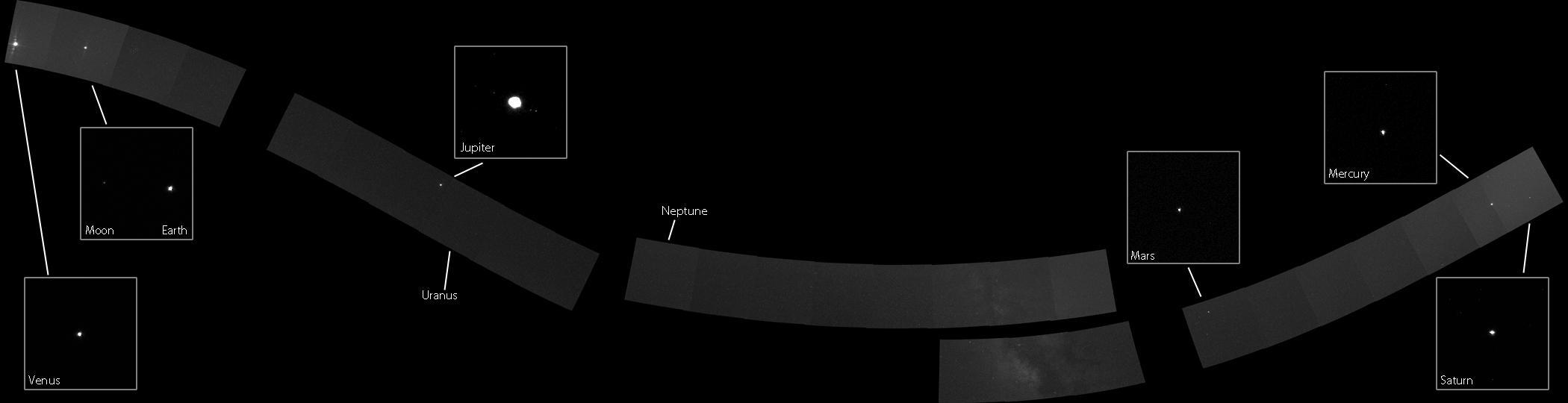
Ver en NASA ↗This is a montage of planetary images taken by spacecraft managed by NASA’s Jet Propulsion Laboratory in Pasadena, CA. Included are from top to bottom images of Mercury, Venus, Earth and Moon, Mars, Jupiter, Saturn, Uranus and Neptune.
Ver en NASA ↗This image of Oberon, Uranus outermost moon, was captured by NASA Voyager 2 on Jan. 24, 1986. Clearly visible are several large impact craters in Oberon icy surface surrounded by bright rays.
Ver en NASA ↗Jupiter, Saturn, Uranus, and Neptune are known as the jovian Jupiter-like planets because they are all gigantic compared with Earth, and they have a gaseous nature. This diagram shows the approximate distance of the jovian planets from the Sun.
Ver en NASA ↗This is a montage of planetary images taken by spacecraft managed by NASA’s Jet Propulsion Laboratory in Pasadena, CA. Included are from top to bottom images of Mercury, Venus, Earth and Moon, Mars, Jupiter, Saturn, Uranus and Neptune.
Ver en NASA ↗This picture is part of NASA Voyager 2 imaging sequence of Ariel, a moon of Uranus taken on January 24, 1986. The complexity of Ariel surface indicates that a variety of geologic processes have occurred.
Ver en NASA ↗This color composite of the Uranian satellite Miranda was taken by NASA Voyager 2 on January 24, 1986. Miranda, just 480 km 300 mi across, is the smallest of Uranus five major satellites.
Ver en NASA ↗The southern hemisphere of Umbriel displays heavy cratering in this NASA Voyager 2 image, taken Jan. 24, 1986. This frame is the most detailed image of Umbriel, the darkest of Uranus larger moons.
Ver en NASA ↗This is an updated montage of planetary images taken by spacecraft managed by NASA’s Jet Propulsion Laboratory in Pasadena, CA. Included are from top to bottom images of Mercury, Venus, Earth and Moon, Mars, Jupiter, Saturn, Uranus and Neptune.
Ver en NASA ↗P-29505 Moon Voyager 2 flyby of Uranus' moons
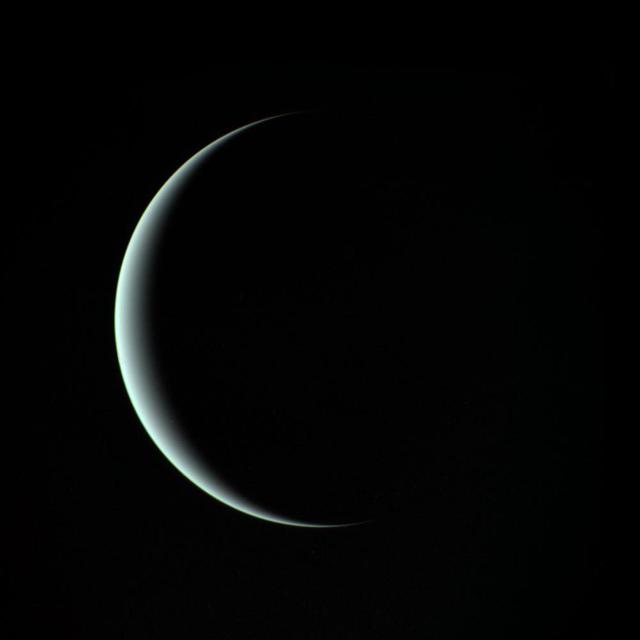
Ver en NASA ↗Range : 1 illion km. ( 600,000 mi. ) Resolution : 140 km. ( 90 mi. ) P-29539C This Voyager 2 image of Uranus was captured as the spacecraft was leaving Uranus behind on its cruise to Neptune. The image is a color composite of three photographs taken through…
Ver en NASA ↗Voyager Saturn Mission Artwork (Mariner - Jupiter - Saturn - Uranus) show slingshot technique
Ver en NASA ↗This high-resolution color composite of Titania was made from NASA Voyager 2 images taken Jan. 24, 1986, as the spacecraft neared its closest approach to Uranus. A large, trenchlike feature is seen near the terminator.
Ver en NASA ↗This image of Miranda, Uranus moon, was acquired by NASA Voyager 2 on Jan. 24, 1986. Miranda displays a dramatically varied surface. Well shown are numerous ridges and valleys -- a topography that was probably produced by compressional tectonics.
Ver en NASA ↗This NASA Voyager 2 image of the Uranian rings delta, gamma, eta, beta and alpha from top was taken Jan. 23, 1986.
Ver en NASA ↗Artist: Rick Guidace This artist concept depicts the rings of Uranus in polar rotation as discovered by NASA Ames C-141 Kuiper Airborne Observatory
Ver en NASA ↗On Jan. 24, 1986, NASA Voyager 2 returned the highest-resolution picture of Titania, Uranus largest satellite. Abundant impact craters of many sizes pockmark the ancient surface; most prominent features are fault valleys that stretch across Titania.
Ver en NASA ↗Voyager 2 obtained this full-disk view of Uranus moon Titania in the early morning hours of Jan. 24, 1986, from a distance of about 500,000 kilometers 300,000 miles. Many circular depressions, probably impact craters, are visible in this clear-filter.
Ver en NASA ↗Range : 2.7 million miles (1.7 million miles) P-29497C Tis Voyager 2, false color composite of Uranus demonstrates the usefulness of special filters in the Voyager cameras for revealing the presence of high altitude hazes in Uranus' atmosphere. The picture is…
Ver en NASA ↗Contenido y metadatos proporcionados por la NASA Image and Video Library.