





/NASA’s%20Artemis%20III%20Announcement%20(Official%20NASA%20Trailer)~thumb.jpg)
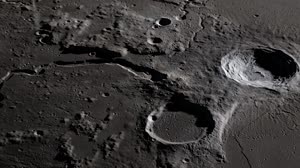
These images from NASA Dawn spacecraft are located in asteroid Vesta Tuccia quadrangle, in Vesta southern hemisphere.
Ver en NASA ↗🚀 Biblioteca espacial oficial
Imágenes y vídeos de NASA
Explora el catálogo multimedia público de NASA sin salir de TuPortalNews.
Explora temas destacados
Selecciona un tema o realiza una búsqueda personalizada.
3.592 resultados en NASA
This image, made from data obtained by NASA Dawn spacecraft, shows the mineral distribution in the southern hemisphere of the giant asteroid Vesta.
Ver en NASA ↗This image from NASA Dawn mission shows the varied minerals on the surface of the giant asteroid Vesta in false color.
Ver en NASA ↗This map from NASA Dawn mission shows the global distribution of hydrogen on the surface of the giant asteroid Vesta.
Ver en NASA ↗These images from NASA Dawn spacecraft are located in asteroid Vesta Tuccia quadrangle, in Vesta southern hemisphere.
Ver en NASA ↗These images from NASA Dawn spacecraft are located in asteroid Vesta Urbinia quadrangle, in Vesta southern hemisphere.
Ver en NASA ↗These images from NASA Dawn spacecraft are located in asteroid Vesta Pinaria quadrangle, in Vesta southern hemisphere.
Ver en NASA ↗This image from NASA Dawn mission shows a crater in the northern hemisphere of the giant asteroid Vesta called Bellicia.
Ver en NASA ↗These images taken by NASA Dawn framing camera are located in asteroids Vesta Numisia quadrangle.
Ver en NASA ↗This frame from a movie presents a series of animations showing NASA Dawn spacecraft traveling to and operating at the giant asteroid Vesta.
Ver en NASA ↗Dwarf planet Ceres is located in the main asteroid belt, between the orbits of Mars and Jupiter, as illustrated in this artist conception.
Ver en NASA ↗This image from NASA Dawn spacecraft shows craters in various states of degradation on the asteroid Vesta.
Ver en NASA ↗This image from NASA Dawn spacecraft shows a rough surface covered with ejecta and fine grooves on the giant asteroid Vesta.
Ver en NASA ↗This image from NASA Dawn spacecraft shows the crater Numisia, located just south of the equator in the Numisia quadrangle on asteroid Vesta.
Ver en NASA ↗This graphic shows the geologic time scale of asteroid Vesta derived from geologic mapping.
Ver en NASA ↗This image shows NASA Dawn spacecraft flying above Vesta, based on an artist concept of the surface of the giant asteroid.
Ver en NASA ↗These images from NASA Dawn spacecraft are located in asteroid Vesta Numisia quadrangle, a few degrees below Vesta equator.
Ver en NASA ↗This composite image from NASA Dawn spacecraft is a simulated true color image of asteroid Vesta northern and equatorial regions.
Ver en NASA ↗This topographic map from NASA Dawn mission shows the two large impact basins in the southern hemisphere of the giant asteroid Vesta.
Ver en NASA ↗These images from NASA Dawn spacecraft show the brightness/darkness of asteroid Vesta surface. These images are located in Vesta Marcia quadrangle.
Ver en NASA ↗These apparent brightness and topography images from NASA Dawn spacecraft are located in asteroid Vesta Sextilia quadrangle, in Vesta southern hemisphere.
Ver en NASA ↗The face of asteroid Masursky as seen by NASA Cassini Imaging Science Subsystem ISS, January, 2000.
Ver en NASA ↗This image from NASA Dawn mission shows three colorized views of the Oppia region in the southern hemisphere of the giant asteroid Vesta.
Ver en NASA ↗These images from NASA Dawn spacecraft show an old, heavily cratered terrain around asteroid Vesta equator.
Ver en NASA ↗Contenido y metadatos proporcionados por la NASA Image and Video Library.