





/NASA’s%20Artemis%20III%20Announcement%20(Official%20NASA%20Trailer)~thumb.jpg)


This false-color mosaic of part of the Moon was constructed from 54 images taken by the imaging system aboard NASA Galileo as the spacecraft flew past the Moon on December 7, 1992.
Ver en NASA ↗🚀 Biblioteca espacial oficial
Imágenes y vídeos de NASA
Explora el catálogo multimedia público de NASA sin salir de TuPortalNews.
Explora temas destacados
Selecciona un tema o realiza una búsqueda personalizada.
19.931 resultados en NASA
GRAIL Bouguer Gravity Moon Map
Ver en NASA ↗This false-color photograph is a composite of 15 images of the Moon taken through three color filters NASA Galileo solid-state imaging system during the spacecraft passage through the Earth-Moon system on December 8, 1992.
Ver en NASA ↗This composite image was made from NASA Cassini which captured a significant portion of the Moon during a Moon flyby imaging sequence.All three images have been scaled so that the brightness of Crisium basin, the dark circular region in the upper right,
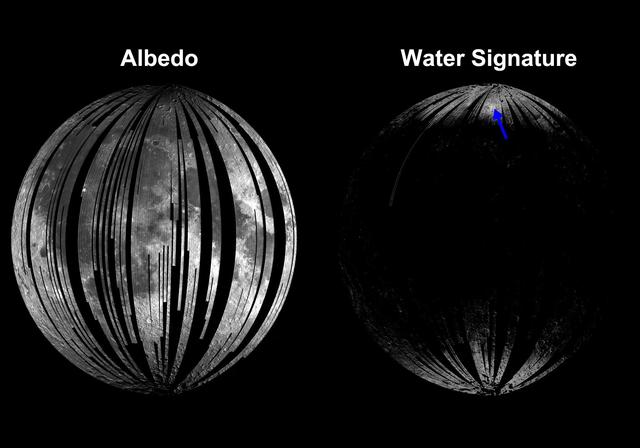
Ver en NASA ↗Different wavelengths of light provide new information about the Orientale Basin region of the moon in a composite image taken by NASA Moon Mineralogy Mapper, a guest instrument aboard the Indian Space Research Organization Chandrayaan-1 spacecraft.
Ver en NASA ↗NASA Moon Minerology Mapper, a guest instrument onboard the Indian Space Research Organization Chandrayaan-1 mission to the moon, looks homeward. Australia is visible in the lower center of the image.
Ver en NASA ↗Dispersing Light through the Moon Mineralogy Mapper
Ver en NASA ↗015A6207.NEF
Ver en NASA ↗The full moon is seen as it rises near the Lincoln Memorial, Saturday, March 19, 2011, in Washington. The full moon tonight is called a "Super Perigee Moon" since it is at it's closest to Earth in 2011. The last full moon so big and close to Earth occurred in…
Ver en NASA ↗This composite image of the moon using Clementine data from 1994 is the view we are most likely to see when the moon is full. Credit: NASA To learn about NASA's LRO project go to: www.nasa.gov/mission_pages/LRO/main/index.html NASA Goddard Space Flight Ce…
Ver en NASA ↗Scientists have discovered these wrinkle ridges in a region of the Moon called Mare Frigoris. These ridges add to evidence that the Moon has an actively changing surface. This image was taken by NASA's Lunar Reconnaissance Orbiter (LRO).
Ver en NASA ↗Slipher Crater: Fractured Moon in 3-D
Ver en NASA ↗Moons in Transit
Ver en NASA ↗Storms and Moons
Ver en NASA ↗The Moons are the Stars
Ver en NASA ↗Petite Moon
Ver en NASA ↗Moons of Interest
Ver en NASA ↗Dramatic Moon
Ver en NASA ↗Moons and Gaps
Ver en NASA ↗Emergent Moons
Ver en NASA ↗It Full of Moons!
Ver en NASA ↗Little Moons
Ver en NASA ↗Contenido y metadatos proporcionados por la NASA Image and Video Library.