




/NASA’s%20Artemis%20III%20Announcement%20(Official%20NASA%20Trailer)~thumb.jpg)
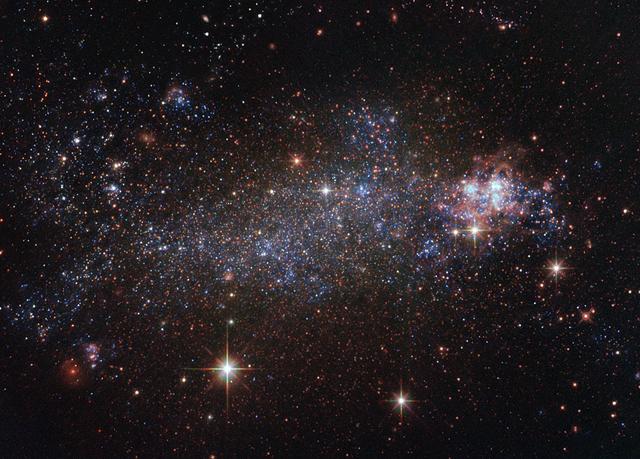

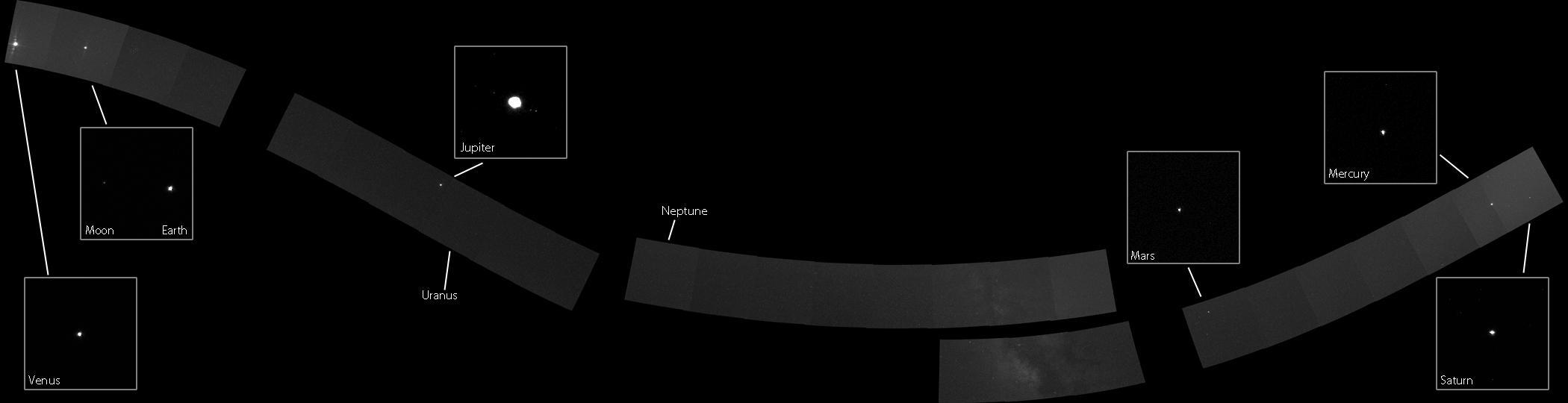
Art by Don Davis Pioneer 10 looking back at the Sun from Neptune's orbit as it becomes the first spacecraft to leave the Solar system
Ver en NASA ↗🚀 Biblioteca espacial oficial
Imágenes y vídeos de NASA
Explora el catálogo multimedia público de NASA sin salir de TuPortalNews.
Explora temas destacados
Selecciona un tema o realiza una búsqueda personalizada.
7.273 resultados en NASA
CAPE CANAVERAL, Fla. – An aerial view of the site in the Industrial Area of NASA's Kennedy Space Center in Florida where a solar power system is being built. The solar power systems are being constructed by NASA and Florida Power & Light Company as part of a …
Ver en NASA ↗Vandenberg Air Force Base, Calif. – At Vandenberg Air Force Base, the Pegasus XL aircraft (left) is ready for mating to NASA's Interstellar Boundary Explorer, or IBEX, spacecraft and upper stage booster (right). The IBEX satellite will make the first map of…
Ver en NASA ↗Vandenberg Air Force Base, Calif. – At Vandenberg Air Force Base in California, NASA’s Interstellar Boundary Explorer, or IBEX, is covered with protective material for a move to the stand in the foreground. The overhead crane will be attached to make the mov…
Ver en NASA ↗CAPE CANAVERAL, Fla. – An aerial view of the site in the Industrial Area of NASA's Kennedy Space Center in Florida where a solar power system is being built. The solar power systems are being constructed by NASA and Florida Power & Light Company as part of a …
Ver en NASA ↗Vandenberg Air Force Base, Calif. – At Vandenberg Air Force Base in California, NASA’s Interstellar Boundary Explorer, or IBEX, waits to be covered so it can be moved to another facility for mating with the Pegasus XL rocket. Designed to detect the edge of t…
Ver en NASA ↗Rebecca Rogers, systems engineer, center, Lachlan Moore, systems integration engineer, right, and Dylan Schmidt, CAPSTONE assembly integration and test lead, background, perform a solar panel string voltage test of the CAPSTONE spacecraft at Tyvak Nano-Satell…
Ver en NASA ↗Researchers at the Marshall Space Flight Center (MSFC) have designed, fabricated and tested the first solar thermal engine, a non-chemical rocket engine that produces lower thrust but has better thrust efficiency than a chemical combustion engine. MSFC turned…
Ver en NASA ↗Researchers at the Marshall Space Flight Center (MSFC) have designed, fabricated, and tested the first solar thermal engine, a non-chemical rocket engine that produces lower thrust but has better thrust efficiency than a chemical combustion engine. MSFC turne…
Ver en NASA ↗Researchers at the Marshall Space Flight Center (MSFC) have designed, fabricated, and tested the first solar thermal engine, a non-chemical rocket engine that produces lower thrust but has better thrust efficiency than a chemical combustion engine. MSFC turne…
Ver en NASA ↗Attendees at the Indianapolis Motor Speedway walk past an inflatable version of NASA’s Space Launch System rocket ahead of the total solar eclipse, Monday, April 8, 2024, in Indianapolis, Ind. A total solar eclipse swept across a narrow portion of the North A…
Ver en NASA ↗An engineer at AeroVironment's Design Development Center in Simi Valley, California, closely inspects a set of silicon solar cells for potential defects. The cells, fabricated by SunPower, Inc., of Sunnyvale, California, are among 64,000 solar cells which hav…
Ver en NASA ↗Technician Marshall MacCready carefully lays a panel of solar cells into place on a wing section of the Helios Prototype flying wing at AeroVironment's Design Development Center in Simi Valley, California. The bi-facial cells, manufactured by SunPower, Inc., …
Ver en NASA ↗STS097-376-019 (7 December 2000) --- A close-up view of the P6 solar array on the International Space Station (ISS), backdropped against the blackness of space and the Earth’s horizon. The P6 solar array is the first of eight sets of solar arrays that a…
Ver en NASA ↗In this photograph, a skylab-4 astronaut performs Extra Vehicular Activities (EVA) outside of the lab. The third crew (Skylab-4) spent 84 days in the orbiting laboratory. The solar observatory was designed for full exposure to the Sun throughout most of the S…
Ver en NASA ↗This striking image of Skylab was photographed by Astronaut Jack Lousma (Skylab-3), as the second crew reached the orbiting laboratory over the delta of the mighty Amazon River. Skylab's solar arrays were exposed directly to the Sun's rays. Solar energy was t…
Ver en NASA ↗KENNEDY SPACE CENTER, Fla. -- Solar arrays part of the payload for the Hubble Servicing Mission, STS-109, await processing in the Vertical Processing Facility. The primary servicing tasks of the mission are to replace Solar Array 2 with Solar Array 3, replac…
Ver en NASA ↗This photograph was taken as the third crew (Skylab-4) departed the space station. The solar observatory was designed for full exposure to the Sun throughout most of the Skylab mission. Solar energy was transformed into electrical power for operation of all s…
Ver en NASA ↗STS097-376-006 (7 Dec 2000) --- A close-up view of the P6 solar array on the International Space Station (ISS), backdropped against the blackness of space and the Earth?s horizon. The P6 solar array is the first of eight sets of solar arrays that at the compl…
Ver en NASA ↗A technician at AeroVironment's Design Development Center in Simi Valley, California, checks a panel of silicon solar cells for conductivity and voltage. The bi-facial cells, fabricated by SunPower, Inc., of Sunnyvale, California, are among 64,000 solar cells…
Ver en NASA ↗cmasaw4_20260407133216_058.JPG
Ver en NASA ↗Launched April 6, 1984, one of the goals of the STS-41C mission was to repair the damaged free-flying Solar Maximum Mission Satellite (SMMS), or Solar Max. The original plan was to make an excursion out to the SMMS and capture it for necessary repairs. Pictur…
Ver en NASA ↗CAPE CANAVERAL, Fla. – At NASA's Kennedy Space Center in Florida, recipients of a NASA Team Award for their parts in the successful construction of NASA's first large-scale solar power generation facility pose for a group portrait. Representatives from NAS…
Ver en NASA ↗Workers inside the Astrotech Space Operations Facility in Titusville, Florida, work to open and extend one of the solar arrays on NASA’s Lucy spacecraft on Aug. 19, 2021. Both solar arrays will be opened to make sure they operate correctly. In view installed …
Ver en NASA ↗Contenido y metadatos proporcionados por la NASA Image and Video Library.