





/NASA’s%20Artemis%20III%20Announcement%20(Official%20NASA%20Trailer)~thumb.jpg)

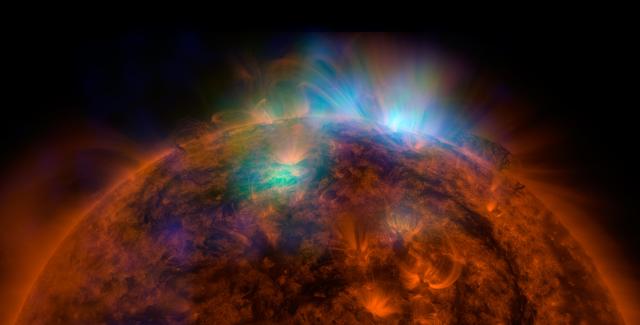
This frame from an animation shows five versions of observations that NASA Curiosity made about one hour apart while Mercury was passing in front of the sun on June 3, 2014. Two sunspots, each about the diameter of Earth, also appear.
Ver en NASA ↗🚀 Biblioteca espacial oficial
Imágenes y vídeos de NASA
Explora el catálogo multimedia público de NASA sin salir de TuPortalNews.
Explora temas destacados
Selecciona un tema o realiza una búsqueda personalizada.
2.907 resultados en NASA
A cratered area near Mercury South Pole was photographed by NASA Mariner 10 during its second flyby of the planet of Sept. 21, 1974 the spacecraft made its first encounter with Mercury on March 19, 1974.
Ver en NASA ↗Intercrater plains and heavily cratered terrain typical of much of Mercury outside the area affected by the formation of the Caloris basin are shown in this image taken during the NASA Mariner 10 first encounter with Mercury in 1974.
Ver en NASA ↗This photograph of Mercury was taken by NASA Mariner 10 spacecraft shows smooth plains areas on Mercury that are thought to be volcanic in origin with lava flows filling in heavily cratered areas.
Ver en NASA ↗NASA Mariner 10 spacecraft was coaxed into a third and final encounter with Mercury in March of 1975. This is one of the highest resolution images of Mercury acquired by the spacecraft. The prominent scarp snaking up the image was named Discovery Rupes.
Ver en NASA ↗The launch of the MA-6, Friendship 7, on February 20, 1962. Boosted by the Mercury-Atlas vehicle, a modified Atlas Intercontinental Ballistic Missile (ICBM), Friendship 7 was the first U.S. marned orbital flight and carried Astronaut John H. Glenn into orbit.…
Ver en NASA ↗Astronaut Alan Shepard fitted with space suit prior to the first marned suborbital flight. Freedom 7, carrying Astronaut Alan Shepard, boosted by the Mercury-Redstone launch vehicle, lifted off on May 5, 1961. Astronaut Shepard became the first American in sp…
Ver en NASA ↗Astronaut Virgil Grissom chats with Astronaut John Glenn prior to entering the Liberty Bell 7 capsule for the MR-4 Mission. The MR-4 mission was the second manned suborbital flight using the Mercury-Redstone booster, which was developed by the Marshall Space …
Ver en NASA ↗Astronaut John Glenn in the Friendship 7 capsule during the first manned orbital flight, the MA-6 mission. Boosted by the Mercury-Atlas vehicle, a modified Atlas (intercontinental ballistic missile), the MA-6 mission lasted for 5 hours and orbited the Earth t…
Ver en NASA ↗A U.S. Marine helicopter attempts to retrieve the sinking capsule, Liberty Bell 7, of the MR-4 mission. The attempt failed and the capsule sank. The MR-4 mission marned by Astronaut Virgil Grissom was the second manned orbital flight boosted by the Mercury-Re…
Ver en NASA ↗Liftoff of MR-4 (Mercury-Redstone), Liberty Bell 7, on July 21, 1961. MR-4 mission was the second marned suborbital flight and carried Astronaut Virgil Grissom aboard the Liberty Bell 7 spacecraft in space for a duration of 15-1/2 minutes.
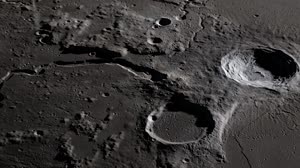
Ver en NASA ↗NASA image acquired: June 03, 2012 This scene is to the northwest of the recently named crater Magritte, in Mercury's south. The image is not map projected; the larger crater actually sits to the north of the two smaller ones. The shadowing helps define the …
Ver en NASA ↗Release Date: December 21, 2011 The crater at the center of this image is named Dickens, after Charles Dickens, the English novelist who lived from 1812 to 1870. Among Dickens' famous works is A Christmas Carol, the story of Bob Cratchit, his family, and hor…
Ver en NASA ↗This scene was imaged by NASA MESSENGER spacecraft Narrow Angle Camera NAC on the Mercury Dual Imaging System MDIS during the spacecraft flyby of Mercury on January 14, 2008.
Ver en NASA ↗During NASA MESSENGER spacecraft flyby of Mercury on January 14, 2008, part of the planned sequence of observations included taking images of the same portion of Mercury surface from five different viewing angles.
Ver en NASA ↗An artist rendering of the MESSENGER spacecraft is shown passing near the crater Hokusai and its extensive system of rays. Both the monochrome and enhanced color views of Mercury were obtained during MESSENGER second Mercury flyby.
Ver en NASA ↗NASA MESSENGER spacecraft Narrow Angle Camera NAC on the Mercury Dual Imaging System MDIS acquired this view of Mercury surface illuminated obliquely from the right by the Sun.
Ver en NASA ↗As NASA MESSENGER spacecraft approached Mercury on Jnuary 14, 2008, the Narrow Angle Camera NAC of the Mercury Dual Imaging System MDIS snapped this image of the crater Matisse.
Ver en NASA ↗After NASA MESSENGER spacecraft completed its successful flyby of Mercury, the Narrow Angle Camera NAC, part of the Mercury Dual Imaging System MDIS, took these images of the receding planet.
Ver en NASA ↗S62-03266 (24 May 1962) --- Earth and sky views taken with hand-held camera by astronaut M. Scott Carpenter during Mercury-Atlas 7 (MA-7) mission. Photo credit: NASA
Ver en NASA ↗S64-36908 (1962) --- Portrait view of astronaut M. Scott Carpenter, wearing Mercury pressure suit, posing for pictures during astronaut training at the Cape Canaveral, Florida. Photo credit: NASA
Ver en NASA ↗On May 9, 2016, Mercury passed directly between the sun and Earth. This event – which happens about 13 times each century – is called a transit. NASA’s Solar Dynamics Observatory, or SDO, studies the sun 24/7 and captured the entire seven-and-a-half-hour even…
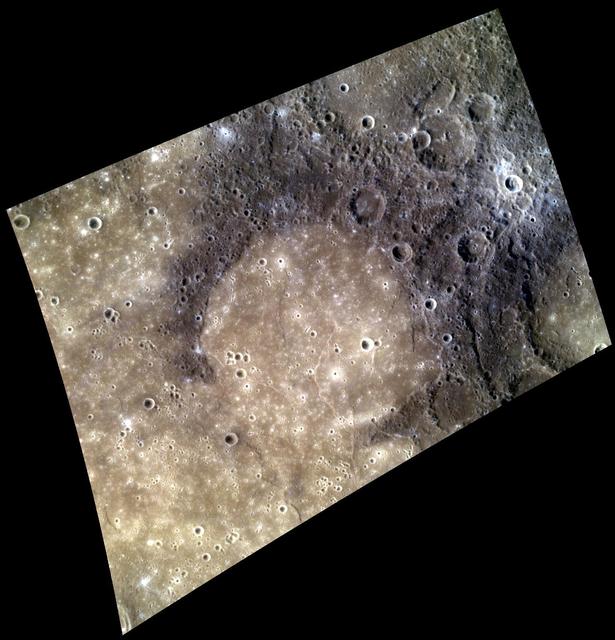
Ver en NASA ↗NASA image acquired October 28, 2011 This stunning, and as of yet unnamed, crater lies within the Caloris basin. Its floor provides another example of the beautiful "hollows" found on Mercury and has an etched appearance similar to that found in th…
Ver en NASA ↗First Image Ever Obtained from Mercury Orbit
Ver en NASA ↗Contenido y metadatos proporcionados por la NASA Image and Video Library.