





/NASA’s%20Artemis%20III%20Announcement%20(Official%20NASA%20Trailer)~thumb.jpg)

This frame from an animation shows how the magnetic field lines emanating from our sun spiral out into the solar system as the sun rotates. NASA Voyager 1 is in an area scientists are calling the stagnation region, at the outer layer of the heliosphere.
Ver en NASA ↗🚀 Biblioteca espacial oficial
Imágenes y vídeos de NASA
Explora el catálogo multimedia público de NASA sin salir de TuPortalNews.
Explora temas destacados
Selecciona un tema o realiza una búsqueda personalizada.
7.273 resultados en NASA
This artist concept illustrates the hottest planet yet observed in the universe. The scorching ball of gas, a hot Jupiter called HD 149026b, is about 3 times hotter than the rocky surface of Venus, the hottest planet in our solar system.
Ver en NASA ↗This image shows the first-ever map of the surface of an exoplanet, or a planet beyond our solar system. Showing temperature variations across the cloudy tops of a gas giant called HD 189733b, the infrared data is taken by NASA Spitzer Space Telescope.
Ver en NASA ↗The image taken by the Oschin Schmidt Telescope, shows the star AC +79 3888, also known as Gliese 445. NASA Voyager 1 spacecraft, which is on a trajectory out of our solar system, is headed toward an encounter with AC +79 3888 circled in red.
Ver en NASA ↗This image shows NASA Juno spacecraft undergoing environmental testing at Lockheed Martin Space Systems on Jan. 26, 2011. All 3 solar array wings are installed and stowed, and the large high-gain antenna is in place on the top of the avionics vault.
Ver en NASA ↗Asteroid 2010 TK7, the first known Earth Trojan asteroid, is circled in green, in this single frame taken by NASA Wide-field Infrared Survey Explorer. The majority of the other dots are stars or galaxies far beyond our solar system.
Ver en NASA ↗Using data from NASA Cassini spacecraft, scientists have created the first global topographic map of Saturn moon Titan, giving researchers a 3-D tool for learning more about one of the most Earthlike and interesting worlds in the solar system.
Ver en NASA ↗This chart compares the first Earth-size planets found around a sun-like star to planets in our own solar system, Earth and Venus. NASA Kepler mission discovered the newfound planets, called Kepler-20e and Kepler-20f.
Ver en NASA ↗This image from NASA Wide-field Infrared Survey Explorer features comet 65/P Gunn. Comets are balls of dust and ice left over from the formation of the solar system. The comet tail is seen here in red trailing off to the right of the comet nucleus.
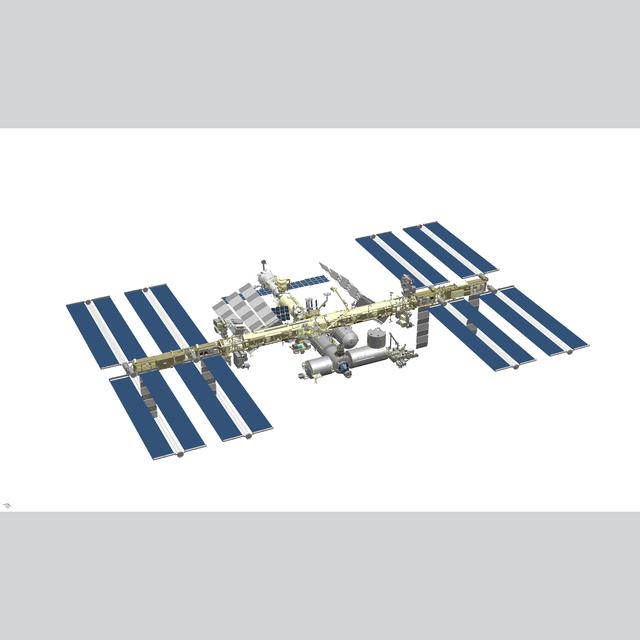
Ver en NASA ↗Testing of the Solar Dynamic Collector for Space Freedom. The solar dynamic power system includes a solar concentrator, which collects sunlight; a receiver, which accepts and stores the concentrated solar energy and transfers this energy to a gas; a Brayton …
Ver en NASA ↗CAPE CANAVERAL, Fla. -- From left, Dr. Steve Lee, with the Denver Museum of Nature and Science; Ulrik Solberg Lund, a LEGO minifigure designer; and Karsten Juel Bunch, a LEGO City senior designer, participate in an educational webcast in the Mission Status Ce…
Ver en NASA ↗CAPE CANAVERAL, Fla. -- From left, Jim Adams, the deputy director of NASA's Planetary Science Division; Scott Bolton, Juno's principal investigator at the Southwest Research Institute (SWRI); and Jan Chodas, Juno's project manager at the Jet Propulsion Labora…
Ver en NASA ↗This is an artist's concept of the tiny moon Hippocamp that was discovered by the Hubble Space Telescope in 2013. Only 20 miles across, it may actually be a broken-off fragment from a much larger neighboring moon, Proteus, seen as a crescent in the background…
Ver en NASA ↗CAPE CANAVERAL, Fla. -- Dr. Steve Lee, with the Denver Museum of Nature and Science, left, hosts an educational webcast in the Mission Status Center at the Kennedy Space Center Visitor Complex in Florida. On hand to ask questions were students, teachers, and …
Ver en NASA ↗CAPE CANAVERAL, Fla. -- Scott Bolton, Juno's principal investigator at the Southwest Research Institute (SWRI), talks to media representative during a post-launch news conference following the successful liftoff of the Juno spacecraft atop a United Launch All…
Ver en NASA ↗CAPE CANAVERAL, Fla. -- From left, Dr. Steve Lee, with the Denver Museum of Nature and Science; Ulrik Solberg Lund, a LEGO minifigure designer; and Karsten Juel Bunch, a LEGO City senior designer, participate in an educational webcast in the Mission Status Ce…
Ver en NASA ↗CAPE CANAVERAL, Fla. -- From left, NASA Public Affairs Officer George Diller; Jim Adams, the deputy director of NASA's Planetary Science Division; Scott Bolton, Juno's principal investigator at the Southwest Research Institute (SWRI); and Jan Chodas, Juno's p…
Ver en NASA ↗CAPE CANAVERAL, Fla. -- Jan Chodas, Juno's project manager at the Jet Propulsion Laboratory (JPL), talks to media representative during a post-launch news conference following the successful liftoff of the Juno spacecraft atop a United Launch Alliance Atlas V…
Ver en NASA ↗Scientists now know the density of the seven TRAPPIST-1 planets with a higher precision than any other planets in the universe, other than those in our own solar system.
Ver en NASA ↗This composite of 11 images of asteroid 2017 BQ6 was generated with radar data collected using NASA's Goldstone Solar System Radar in California Mojave Desert on Feb. 5, 2017.
Ver en NASA ↗This image is an artist's rendition of NASA's InSight lander. The lander will seek the fingerprints of the processes that formed the rocky planets of the solar system, more than 4 billion years ago.
Ver en NASA ↗This sky map shows the location of the star HD 219134 circle, host to the nearest confirmed rocky planet found to date outside of our solar system. The star lies just off the W shape of the constellation Cassiopeia.
Ver en NASA ↗The artist rendition shows the newly discovered planet-like object, dubbed Sedna, in relation to other bodies in the solar system, including Earth and its Moon; Pluto; and Quaoar, a planetoid beyond Pluto.
Ver en NASA ↗In February 1980, a satellite called Solar Maximum Mission Spacecraft, or Solar Max, was launched into Earth's orbit. Its primary objective was to provide a detailed study of solar flares, active regions on the Sun's surface, sunspots, and other solar activit…
Ver en NASA ↗Contenido y metadatos proporcionados por la NASA Image and Video Library.