





/NASA’s%20Artemis%20III%20Announcement%20(Official%20NASA%20Trailer)~thumb.jpg)

NASA's Juno captured this view of Jupiter during the mission's 54th close flyby of the giant planet on Sept. 7, 2023. The image was made with raw data from the JunoCam instrument that was processed to enhance details in cloud features and colors.
Ver en NASA ↗🚀 Biblioteca espacial oficial
Imágenes y vídeos de NASA
Explora el catálogo multimedia público de NASA sin salir de TuPortalNews.
Explora temas destacados
Selecciona un tema o realiza una búsqueda personalizada.
2.639 resultados en NASA
This montage features activity in the turbulent region of Jupiter Great Red Spot GRS. Four sets of images of the GRS were taken by NASA Galileo imaging system over an 11.5 hour period on 26 June, 1996.
Ver en NASA ↗This mosaic of Jupiter Great Red Spot taken by NASA Voyager 1, shows the area around the northern boundary where a white cloud is seen which extends to east of the region.
Ver en NASA ↗Images taken by the New Horizons Long-Range Reconnaissance Imager LORRI of Jupiter night side showed lightning strikes. Each trike is probably the cumulative brightness of multiple strikes.
Ver en NASA ↗A four-panel frame shows a section of Jupiter north equatorial belt viewed by NASA Cassini spacecraft at four different wavelengths, and a separate reference frame shows the location of the belt on the planet.
Ver en NASA ↗These infrared images obtained from NASA Infrared Telescope Facility in Mauna Kea, Hawaii, show before and aftereffects from particle debris in Jupiter atmosphere after an object hurtled into the atmosphere on July 19, 2009.
Ver en NASA ↗Scientists produced new global maps of Jupiter using the Wide Field Camera 3 on NASA Hubble Space Telescope. One color map is shown here, projected onto a globe and as a flat image.
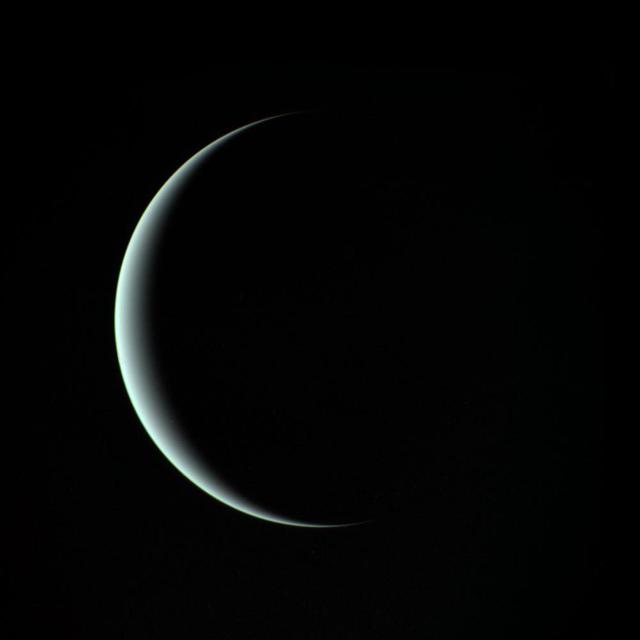
Ver en NASA ↗On January 15, 2001, 17 days after it passed its closest approach to Jupiter, NASA Cassini spacecraft looked back to see the giant planet as a thinning crescent.
Ver en NASA ↗This graphic shows the distribution of the organic molecule acetylene at the north and south poles of Jupiter, based on data obtained by NASA Cassini spacecraft in early January 2001. Movie is available at the Photojournal.
Ver en NASA ↗In this movie, put together from false-color images taken by the New Horizons Ralph instrument as the spacecraft flew past Jupiter in early 2007, show ammonia clouds appearing as bright blue areas as they form and disperse.
Ver en NASA ↗This sequence of nine true-color, narrow-angle images shows the varying appearance of Jupiter as it rotated through more than a complete 360-degree turn. Image from NASA Cassini spacecraft.
Ver en NASA ↗The dark hot spot in this false-color image from NASA Cassini spacecraft is a window deep into Jupiter atmosphere. All around it are layers of higher clouds, with colors indicating which layer of the atmosphere the clouds are in.
Ver en NASA ↗The familiar banded appearance of Jupiter at low and middle latitudes gradually gives way to a more mottled appearance at high latitudes in this striking true color image taken Dec. 13, 2000, by NASA Cassini spacecraft.
Ver en NASA ↗In these images obtained by amateur astronomers, Jupiter can be seen losing a brown-colored belt south of the equator called the South Equatorial Belt SEB from 2009 to 2010.
Ver en NASA ↗This true color mosaic of Jupiter was constructed from images taken by the narrow angle camera onboard NASA Cassini spacecraft, during its closest approach to the giant planet and is its most detailed portrait.
Ver en NASA ↗This image from NASA's Juno spacecraft captures the intensity of the jets and vortices in Jupiter's North North Temperate Belt.
Ver en NASA ↗The south pole of Jupiter and a potential transient luminous event — a bright, unpredictable, and extremely brief flash of light — is seen in this annotated image of data acquired on April 10, 2020, from Juno's UVS instrument.
Ver en NASA ↗NuSTAR detected high-energy X-rays from the auroras near Jupiter's north and south poles.
Ver en NASA ↗This false color view of Jupiter polar haze was created by citizen scientist Gerald Eichstadt using data from the JunoCam instrument on NASA's Juno spacecraft.
Ver en NASA ↗This enhanced-color image of Jupiter south pole and its swirling atmosphere was created by citizen scientist Roman Tkachenko using data from the JunoCam imager on NASA's Juno spacecraft.
Ver en NASA ↗This view from NASA's Juno spacecraft captures colorful, intricate patterns in a jet stream region of Jupiter's northern hemisphere known as "Jet N3."
Ver en NASA ↗See Jovian clouds in striking shades of blue in this new view taken by NASA's Juno spacecraft.
Ver en NASA ↗NASA's Juno spacecraft observed the complex colors and structure of Jupiter's clouds as it completed its 43rd close flyby of the giant planet on July 5, 2022.
Ver en NASA ↗This color-enhanced image is of Jupiter's northern polar belt region as seen by NASA's Juno spacecraft on Dec. 16, 2017.
Ver en NASA ↗Contenido y metadatos proporcionados por la NASA Image and Video Library.